
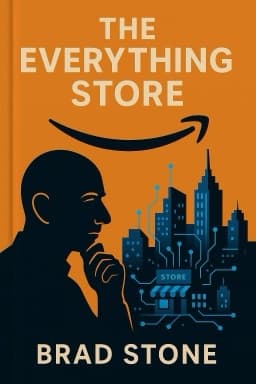
Inside Amazon's Mind: How a Garage Startup Became the Everything Store
From humble beginnings to global dominance: The visionary journey that reshaped retail forever.

Imagine a young boy in Houston, immersed in a gifted education program that nurtured creativity and independent thinking. This boy grew up to become a visionary who saw the potential of the Internet before most. His early career in quantitative finance taught him the power of data and algorithms, but it was a simple mental model — the regret-minimization framework — that propelled him to leave a secure job and dive into the unknown world of online retail.
Starting in a modest garage, Amazon’s first desks were literally doors bought from a hardware store, symbolizing the startup’s scrappy, frugal culture. The early website was functional but revolutionary, offering customers an unprecedented selection of books. To build trust, employees seeded the first product reviews themselves, creating a community of readers sharing insights. This customer-centric approach laid the foundation for what would become a retail revolution.
Rapid growth became the mantra — 'Get Big Fast' — as the company raised capital despite skepticism from investors. The IPO came before profitability, a bold move that signaled confidence in the long-term vision. Employees worked relentlessly, sleeping in offices and pushing boundaries to scale infrastructure and logistics.
Amazon didn’t stop at books. Expanding into music, DVDs, toys, and electronics, the company introduced innovations like the patented 1-Click ordering system, drastically simplifying the shopping experience. The launch of the Kindle e-reader revolutionized publishing, creating a digital ecosystem that empowered authors and readers alike.
At the core of Amazon’s success is a unique culture driven by high standards and customer obsession. Meetings begin with silent reading of detailed narratives instead of slides, fostering deep understanding. Hiring is rigorous, only bringing in people who raise the talent bar. The founder’s intense personality and distinctive laugh are legendary, reflecting a culture of relentless pursuit of excellence.
Competition was fierce. Traditional retailers like Borders and Circuit City closed their doors as Amazon’s convenience and pricing power disrupted the market. The company transformed from a retailer to a vast marketplace, with third-party sellers accounting for over half of sales. Legal scrutiny followed, with lawsuits over pricing and allegations of unfair practices, highlighting the challenges of managing market dominance responsibly.
Technological breakthroughs like Amazon Web Services (AWS) began as internal tools but grew into the backbone of modern cloud computing, powering startups and enterprises worldwide. The Kindle and streaming services built a comprehensive digital content ecosystem, further expanding Amazon’s influence beyond retail.
Challenges persisted with leadership struggles and public criticism over labor practices. Yet, the company’s 'Day 1' philosophy — treating every day as a fresh start for innovation — continues to drive its evolution. Ventures like Blue Origin reflect ambitions that reach beyond Earth, embodying a spirit of invention and long-term vision.
Amazon’s journey is a powerful testament to how vision, discipline, and customer obsession can create transformational impact. It reshaped commerce, technology, and culture, inspiring entrepreneurs and changing how we live and shop. As the company looks to the future, it reminds us that the journey of invention is endless, and every day holds new possibilities.
For anyone interested in entrepreneurship, innovation, or the future of retail, Amazon’s story offers invaluable lessons and inspiration. It’s a narrative of relentless ambition, bold decisions, and a profound commitment to serving customers that continues to unfold.
References: Insights based on Amazon’s history, leadership principles, and innovations as detailed in various sources including Fearless Culture, BrandVM, SteeringPoint, and AM World Group blogs. 1 2 3 4
Want to explore more insights from this book?
Read the full book summary