
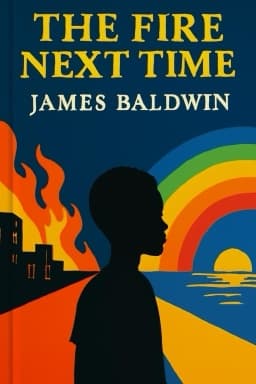
How ‘The Fire Next Time’ Predicted America’s Racial Reckoning
Baldwin’s warnings and hopes echo in today’s headlines.

Baldwin’s warnings and hopes echo in today’s headlines.
Introduction: A Prophetic Voice
James Baldwin’s ‘The Fire Next Time’ is more than a work of literature—it is a prophecy. Baldwin saw, with unflinching clarity, the storms gathering on America’s horizon. His essays, written in the early 1960s, anticipate the crises that would erupt in the decades to follow: uprisings in the streets, the persistence of institutional racism, and the urgent demand for justice.
Ignoring History: The Cost of Denial
Baldwin warns that nations, like individuals, cannot escape their past. The refusal to confront the legacy of slavery and segregation, he argues, will lead to disaster. This warning resonates in today’s debates about monuments, reparations, and the teaching of history. Baldwin’s insight: only by facing the truth can a nation hope to heal.
Systemic Racism: The Unfinished Work
Baldwin describes racism not as a matter of individual prejudice, but as a system—woven into laws, institutions, and everyday life. He saw how economic inequality, police brutality, and educational disparities reinforced each other. In the era of Black Lives Matter, Baldwin’s diagnosis feels more urgent than ever.
White Innocence: The Dangerous Myth
Baldwin’s critique of white innocence—denial of complicity, refusal to see injustice—is echoed in current debates about privilege and allyship. He warns that this innocence is not harmless, but a barrier to real change. Only when we drop the mask of innocence can we begin the work of reconciliation.
Love and the Possibility of Renewal
Despite his warnings, Baldwin offers hope. He insists that love—honest, courageous, and demanding—is the only force capable of transforming individuals and societies. This love requires truth-telling, accountability, and the willingness to risk vulnerability. Baldwin’s vision is echoed in today’s calls for restorative justice and community healing.
Conclusion: The Fire Next Time—And Now
Baldwin’s prophecy is not just a warning, but an invitation. The fires of injustice still burn, but so does the hope for renewal. Baldwin’s words remain a guide for those willing to see, to act, and to love.
For a deeper dive into Baldwin’s predictions and their modern echoes, see reviews and analyses at LitCharts, Blinkist, and Nathan Eberline’s blog. 1 2 4
Want to explore more insights from this book?
Read the full book summary