
Why Humanity’s Destiny Lies Among the Stars: The Science and Spirit Behind Our Interstellar Ambitions
Unveiling the cosmic roadmap: How our survival, curiosity, and technology are pushing us beyond Earth

Unveiling the cosmic roadmap: How our survival, curiosity, and technology are pushing us beyond Earth
Since the dawn of our species, humanity has been shaped by adversity. Our ancestors survived the Toba supervolcano, a cataclysm that nearly wiped us out, leaving only a few thousand survivors to repopulate the world. This event, etched into our DNA, forged a collective resilience and a drive to seek new horizons. Today, that instinct is more relevant than ever, as we face threats from space—asteroids, comets, and cosmic radiation—that could erase our civilization in an instant.
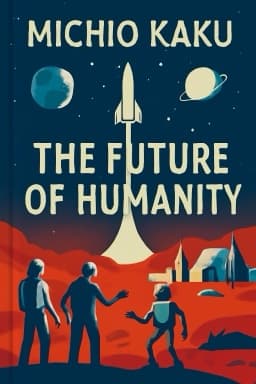
Michio Kaku’s vision in 'The Future of Humanity' is both scientific and deeply human. He argues that extinction is the norm in the universe, not the exception. The fossil record is a graveyard of vanished species, and Earth’s safety is only temporary. To ensure our survival, we must become a multiplanetary species. This is not just a matter of curiosity—it is a planetary insurance policy.
The journey to the stars began with dreamers and engineers who were once ridiculed. From Tsiolkovsky’s rocket equation to Goddard’s liquid-fueled rockets, pioneers laid the foundation for the Space Age. The Cold War’s space race led to historic triumphs, but also to stagnation as political will waned. Now, private industry is reigniting the dream, lowering launch costs, and opening the heavens to all who dare to dream.
The moon, once a barren symbol of exploration, is now seen as a springboard for industry and settlement. Water ice in lunar craters can be turned into fuel and life support, while helium-3 offers hope for clean fusion energy. Private companies are racing to mine the moon, set up habitats, and even welcome tourists. Legal questions remain, but the momentum is unstoppable.
Beyond the moon, asteroids beckon with unimaginable riches. Some contain more platinum than has ever been mined on Earth, promising an economic revolution. Mars, the Red Planet, is the ultimate prize—a place to build a new home, test our ingenuity, and perhaps even terraform an entire world. The challenges are immense, from radiation to low gravity, but so is the potential.
The search for extraterrestrial life adds another dimension to our journey. Thousands of exoplanets have been discovered, some in the habitable zone, raising the tantalizing possibility that we are not alone. The silence of the universe, however, reminds us that intelligent life may be rare—or that we are just at the beginning of a much larger story.
As technology advances, the boundaries between biology and machine blur. Gene editing, AI, and brain-computer interfaces may one day allow us to transcend aging and even upload our minds. These possibilities raise profound ethical questions about what it means to be human.
Ultimately, the greatest risk we face is complacency. Supervolcanoes, asteroids, nuclear war, and pandemics threaten our existence. Becoming a multiplanetary species is not just a dream—it is a necessity. Our journey to the stars is about survival, but also about hope, curiosity, and the desire to know our place in the cosmos. We are the universe’s way of knowing itself, and our story is just beginning.
Want to explore more insights from this book?
Read the full book summary