
The Geometry of Wealth: How Simple Shapes Can Revolutionize Your Financial Life
A surprising yet elegant framework to align your money with your life’s meaning

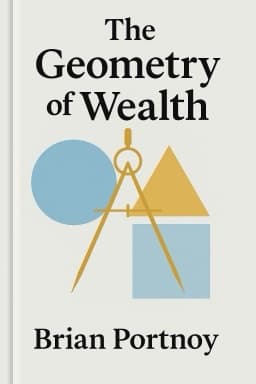
What if the key to mastering your financial life could be visualized through simple geometric shapes? The Geometry of Wealth framework distills the complexity of money management into three core elements symbolized by the circle, triangle, and square—each representing purpose, priorities, and tactics respectively.
The circle embodies purpose, the ever-evolving sense of why you want money and what it means to you. It is continuous, without beginning or end, reflecting the ongoing nature of defining your values and meaning. This foundation grounds all financial decisions in what truly matters.
The triangle stands for priorities, focusing your attention on protecting yourself from risks, matching resources to your goals, and reaching for aspirations with humility and gratitude. It teaches balance and hierarchy, helping you allocate your energy and money wisely.
The square represents tactics, the practical tools and behaviors that bring your plans to life. This includes managing your investment behavior, constructing portfolios, and balancing growth, pain, fit, and flexibility—the four corners that stabilize your financial journey.
Adaptive simplicity flows through this framework, encouraging you to embrace change and complexity with clarity and flexibility. Instead of chasing every new strategy or market trend, you focus on a few intelligent actions aligned with your purpose and priorities.
This elegant metaphor not only simplifies financial concepts but also integrates psychological insights about human behavior, time perception, and resilience, equipping you to build wealth that supports a meaningful, joyful life.
Explore this approach and transform your relationship with money by aligning your financial life with your unique story and values.
For further inspiration, see top personal finance books and expert recommendations from 2025 2 , 3 .
Want to explore more insights from this book?
Read the full book summary