
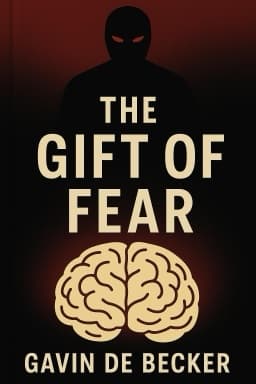
Why Ignoring Your Gut Could Be Dangerous: Lessons from ‘The Gift of Fear’
How tuning into your intuition can protect you from violence and help you navigate risky situations.

Have you ever felt an inexplicable unease in a situation, only to later realize something was indeed wrong? This is your intuition, a complex and powerful survival mechanism that processes vast amounts of information unconsciously to alert you to danger.
The book 'The Gift of Fear' emphasizes that intuition is not a mystical force but a cognitive process evolved to help humans survive. It integrates sensory data, memories, and subtle behavioral cues to produce a feeling of fear or unease when danger is near. This fear is not anxiety; it is a signal demanding respect and action.
One common manipulative tactic is forced teaming, where a stranger uses inclusive language and false partnership to lower your defenses. For instance, a seemingly friendly man may say, 'We’re both here to help,' making you feel obligated to cooperate. Recognizing this as a survival signal can prevent you from falling into a trap.
Violence often stems from individuals shaped by trauma and neglect, but it is predictable. Most violent acts are preceded by warning signs such as threats, persistence despite rejection, and boundary violations. Models like JACA and RICE help us understand the decision-making processes behind violence and how to assess risks effectively.
Fear, when understood correctly, is a gift. It primes your body to act, whether to flee or defend yourself. However, misplaced fear or anxiety can be debilitating. Learning to differentiate between the two is essential for living confidently and safely.
Threats are often promises of harm and should never be ignored. Persistence, especially when someone refuses to accept 'no,' is one of the strongest predictors of violence. Legal protections may help but are not foolproof, requiring vigilance and early intervention.
By trusting your gut and understanding these survival signals, you reclaim control over your safety. This knowledge empowers you to navigate the world with confidence, reducing fear and increasing freedom.
Next, we will dive deeper into how to apply these principles in real-life situations and build resilience against violence.
Want to explore more insights from this book?
Read the full book summary