
Is God Really Unnecessary? The Shocking Science Behind The Grand Design
Exploring how modern physics challenges traditional beliefs about creation and the role of a divine creator.

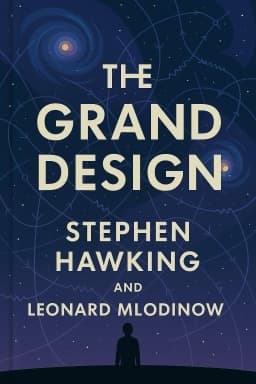
For centuries, humanity has sought to understand why there is something rather than nothing. Traditional answers often invoked a divine creator, a God who designed and initiated the universe. But what if the universe could come into existence without any external cause? This is the provocative claim made by Stephen Hawking and Leonard Mlodinow in their seminal work, The Grand Design. They argue that modern physics, especially quantum mechanics and cosmology, provides a framework where the universe can spontaneously emerge from 'nothing'—a concept radically different from classical notions of creation.
The cornerstone of this argument lies in the laws of quantum mechanics. Unlike classical physics, quantum laws allow for fluctuations in energy even in empty space, a phenomenon known as quantum vacuum fluctuations. These fluctuations can produce particles and, on a grander scale, entire universes. This means that the universe’s existence is not a miraculous event but a natural consequence of physical laws.
Adding to this, the multiverse theory suggests that our universe is just one bubble among countless others, each with different physical laws and constants. This vast cosmic landscape means that it is not surprising we find ourselves in a universe compatible with life—the anthropic principle explains this selection bias. We observe this fine-tuned universe simply because only such universes can harbor observers like us.
These ideas challenge the traditional role of God as the prime mover or designer. Instead, the universe’s existence and properties arise from a combination of quantum physics and cosmic chance. The book also discusses the no-boundary proposal, which treats the universe’s beginning as a smooth quantum event without a singular starting point, removing the need for a creator.
While these scientific insights do not disprove God, they provide a compelling alternative explanation grounded in natural laws. They invite us to rethink creation, existence, and our place in the cosmos with a fresh, awe-inspired perspective.
In conclusion, The Grand Design offers a profound journey through the frontiers of physics, blending science and philosophy to illuminate the mysteries of the universe. Whether you are a believer or skeptic, the book challenges us to expand our understanding of reality in ways both humbling and exhilarating.
For further reading, consider exploring detailed reviews and critiques from leading cosmologists and philosophers, available through scientific journals and popular science platforms.
Want to explore more insights from this book?
Read the full book summary