
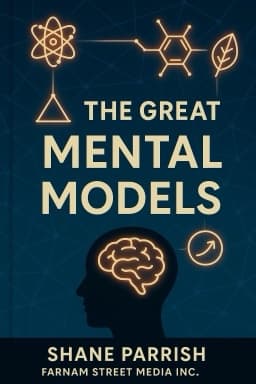
How ‘The Great Mental Models’ Can Make You Smarter and More Decisive — Here’s Why
Explore the science-backed mental frameworks that boost clarity, creativity, and confidence

In an era of information overload and rapid change, making clear, confident decisions is more challenging than ever. Fortunately, Shane Parrish’s The Great Mental Models series offers a powerful antidote: a curated set of thinking tools designed to cut through confusion and sharpen your cognitive edge.
Mental models are essentially shortcuts that help you understand complex systems and predict outcomes. The book series introduces foundational concepts like the relativity of perspective, showing how shifting your viewpoint can reveal hidden truths and avoid misunderstandings. This is crucial for overcoming common cognitive biases that cloud judgment.
Another key insight is inertia — the natural resistance to change ingrained in habits, beliefs, and organizations. Recognizing this helps you design better strategies for transformation, whether in personal growth or business innovation. The contrasting examples of lead’s long-lasting use versus absinthe’s quick ban demonstrate how mass and momentum influence change velocity.
Friction and viscosity represent subtle forces that sap energy and slow progress. The book’s example of Soviet communication bottlenecks during the Chernobyl disaster underscores the high stakes of organizational resistance. Conversely, Toyota’s lean manufacturing shows how reducing friction unleashes creativity and efficiency.
Velocity reminds us that speed without direction is wasted effort. Napoleon’s strategic movements highlight the power of purposeful action. Leverage teaches how to amplify your impact by positioning yourself advantageously, using resources and relationships smartly.
Integrating these models into a latticework creates a flexible mental toolkit. This interdisciplinary approach improves problem-solving, fosters innovation, and enhances decision-making under uncertainty. It also encourages continuous learning and humility, as no single model explains everything.
By adopting these mental models, you can transform how you think, work, and live. You’ll become more adaptable, creative, and confident — ready to tackle complexity with clarity and grace.
Start today by exploring one model at a time, reflecting on its relevance, and applying it in real situations. Over time, you’ll build a powerful framework that supports smarter, more decisive choices.
Sources: Goodreads reviews, Toby Sinclair’s book summary, Blinkist insights, Reddit book discussion 2 3 1 4
Want to explore more insights from this book?
Read the full book summary