
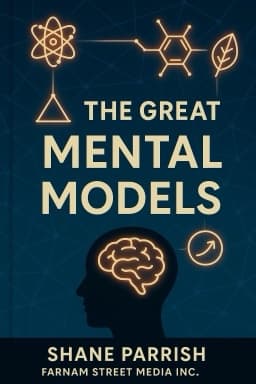
The Secret Weapons of Top Thinkers: Why ‘The Great Mental Models’ Should Be Your Next Read
Unlock the cognitive frameworks that elite thinkers use to solve problems and innovate

What separates top thinkers, innovators, and leaders from the rest? One answer lies in their mental frameworks — the mental models that structure their understanding and guide their decisions. Shane Parrish’s The Great Mental Models series distills these powerful cognitive tools into accessible lessons that anyone can learn and apply.
The journey begins with perspective — realizing that our view of reality is limited and relative. By adopting multiple viewpoints, we expand our understanding and avoid the pitfalls of narrow thinking. This is the foundation of empathy and creativity.
Energy and entropy models teach us about the balance between order and chaos. Understanding these principles helps us appreciate why systems degrade without input and how effort maintains structure, whether in nature, organizations, or ideas.
Inertia and friction explain resistance to change. These models illuminate why habits and institutions are hard to shift and how reducing resistance can accelerate progress. Historical and organizational examples enrich these concepts with real-world relevance.
Velocity and leverage show how speed combined with direction, and strategic positioning, multiply impact. These models are essential for effective leadership, innovation, and negotiation.
Finally, the book emphasizes building a latticework — an interconnected collection of mental models — to create a robust, adaptable cognitive toolkit. This approach fosters interdisciplinary thinking, pattern recognition, and continuous learning, all critical skills in education and beyond.
By mastering these mental models, you equip yourself with the secret weapons of top thinkers, enabling you to solve complex problems, innovate, and lead with confidence.
Start building your latticework today and unlock your full cognitive potential.
Sources: Blinkist book summary, Goodreads user reviews, Toby Sinclair’s analysis, Reddit reader discussions 1 2 3 4
Want to explore more insights from this book?
Read the full book summary