
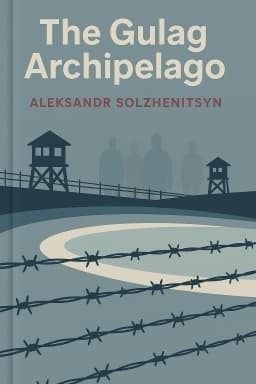
7 Shocking Truths About The Gulag Archipelago You Never Knew
Discover the hidden and often overlooked realities behind Solzhenitsyn’s groundbreaking book

Alexander Solzhenitsyn’s The Gulag Archipelago lifted the veil on the Soviet forced labor camps, but beyond the well-known horrors, there exist lesser-known truths that deepen our understanding of this brutal system.
1. Arrest Was a Spiritual Earthquake: The moment of arrest was not just a legal procedure but a profound shattering of a person’s universe. Victims were plunged into a terrifying unknown with no explanation, often in the middle of the night to maximize disorientation and fear.
2. Quotas Over Evidence: Mass arrests were driven by quotas imposed on security organs rather than actual evidence. Innocent people were swept up arbitrarily, destroying families and communities indiscriminately.
3. Article 58’s Broad Reach: This single article of the Soviet penal code was expansively interpreted to criminalize a wide spectrum of behaviors, enabling mass repression under the guise of legality.
4. Interrogations Were Torture Sessions: Physical and psychological torture were routine, with methods including sleep deprivation, beatings, and the use of heated rods. Confessions were prized over truth.
5. Camp Society Had Its Own Culture: Despite oppression, prisoners developed unique social hierarchies, languages, and customs that helped them survive and resist.
6. Women Faced Unique Hardships: Female prisoners endured sexual violence and acted as moral anchors within the camps, sustaining faith and solidarity.
7. Exile Extended Punishment: Many prisoners were sent into forced exile after their sentences, isolated in bleak regions under surveillance, often for years.
These facts reveal the Gulag as not only a system of physical imprisonment but a complex mechanism of psychological and social destruction. Understanding these layers helps us appreciate the full scope of Solzhenitsyn’s work and the resilience of those who endured it.
Want to explore more insights from this book?
Read the full book summary