
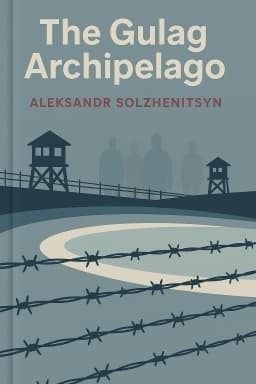
Inside the Soviet Nightmare: How 'The Gulag Archipelago' Exposes the Dark Heart of Totalitarianism
Unveiling the brutal machinery of the Soviet Gulag system through Solzhenitsyn’s landmark work

Alexander Solzhenitsyn’s monumental work, The Gulag Archipelago, stands as a chilling testament to the horrors inflicted by the Soviet totalitarian state. It transcends mere documentation of abuses to become a spiritual and psychological journey through a system designed to annihilate human dignity. The book meticulously charts the evolution of the Gulag from its inception in the 1920s, through the waves of repression that swept the Soviet Union, to the daily agonies endured by millions.
At the heart of the narrative is the moment of arrest — a sudden, soul-shattering rupture that thrusts individuals into a terrifying unknown. Solzhenitsyn captures the psychological earthquake of being torn from normal life without explanation, often in the dead of night, as families are devastated and communities silenced. This initial trauma sets the stage for the brutal machinery of the camps, where forced labor, starvation, and torture are routine. The interrogation rooms, described in harrowing detail, reveal a system where truth is irrelevant, and confessions are extracted through barbaric means.
Yet, amidst the darkness, Solzhenitsyn also illuminates the resilience of the human spirit. Prisoners forge a unique social fabric, develop secret languages, and cling to faith and hope as acts of defiance. Women, in particular, emerge as moral anchors, sustaining communities under unimaginable hardship.
The book also explores the long shadow of exile that followed imprisonment, extending punishment and isolation. Entire ethnic groups were uprooted in campaigns of social engineering, leaving scars that persist across generations. Finally, Solzhenitsyn reflects on the moral complexity of the Gulag — where oppressors and victims alike wrestle with good and evil within themselves.
This blog draws upon diverse sources, including scholarly reviews, survivor accounts, and historical analyses, to provide a comprehensive understanding of the Gulag’s place in history and its lessons for humanity today. Through this exploration, we see why The Gulag Archipelago remains a vital work for understanding the dangers of unchecked power and the enduring strength of human dignity.
Want to explore more insights from this book?
Read the full book summary