
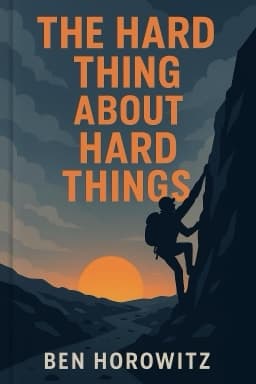
The Brutal Truth About Startup Leadership: Why There Are No Easy Answers
How embracing uncertainty and tough choices defines the best CEOs

Many aspiring founders envision leadership as a path paved with inspiring speeches, visionary strategies, and clear victories. However, Ben Horowitz’s The Hard Thing About Hard Things shatters this illusion with a sobering truth:
Horowitz introduces the concept of peacetime versus wartime CEOs. Peacetime leaders focus on culture, growth, and consensus-building, while wartime leaders must be ruthless, decisive, and unafraid to make unpopular decisions. This duality requires leaders to shift mindsets fluidly depending on circumstances.
The book stresses that courage is not the absence of fear but the ability to act despite it. Leaders often face decisions that pit personal relationships against company survival, such as firing a close friend or laying off loyal employees. These moments are unnatural and deeply painful but essential. Horowitz candidly shares his own experiences to demonstrate that mastering these skills is possible through deliberate practice.
Radical transparency emerges as a recurring theme. Leaders who hide bad news breed distrust and paralysis, while those who communicate openly enable their teams to act swiftly and cohesively. One CEO’s story of telling his team, 'We are getting our asses kicked,' exemplifies how brutal honesty can galvanize effort rather than demoralize.
Another core insight is the rejection of silver bullets. Leadership and product challenges rarely have perfect solutions. Instead, success comes through persistent incremental progress and learning from failures quickly.
Ultimately, Horowitz’s book is a call to embrace the hard things—the sleepless nights, the gut-wrenching decisions, the loneliness of command—as the true test of leadership. Only by accepting these realities can leaders build companies that endure.
For anyone stepping into the arena of startup leadership, this book offers not comfort but preparation. It equips you to face the brutal truths with clarity and courage, transforming uncertainty into opportunity.
Sources: sam-harris.medium.com, amazon.com, linkedin.com 1 2 4
Want to explore more insights from this book?
Read the full book summary