
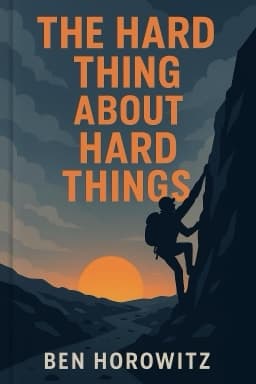
Why 'The Hard Thing About Hard Things' Is the Ultimate Survival Guide for Startup Founders
Unveiling the raw truths and brutal lessons every founder must face to build a lasting company

Entrepreneurship is often romanticized as a journey of passion, innovation, and breakthrough success. Yet, the reality is far more complex and challenging. In his seminal book, The Hard Thing About Hard Things, Ben Horowitz pulls back the curtain to reveal the raw, unvarnished truth about what it means to lead a startup through the toughest moments. This is not a book about easy answers; it is a guide to confronting the brutal struggles and making decisions that no one else wants to make.
At the heart of Horowitz's message is the concept of The Struggle—those moments when doubt, fear, and loneliness threaten to overwhelm the entrepreneur. He describes how great leaders don't avoid these moments but embrace them, understanding that struggle is the crucible where resilience and greatness are forged. One vivid example is a CEO who faced imminent bankruptcy yet chose radical transparency with his team, turning despair into collective action. This honesty builds trust and accelerates problem-solving, a lesson often overlooked in leadership discourse.
Leadership, according to Horowitz, is not governed by simple rules or formulas. Instead, it demands courage and clarity in the face of uncertainty. The book highlights how wartime CEOs must make decisions that defy conventional wisdom, switching between peacetime and wartime modes as circumstances dictate. These leaders act decisively, often in isolation, demonstrating that courage is a skill to be learned, not a trait you're born with.
People are the foundation of every company, and managing them well is a strategic imperative. Horowitz emphasizes prioritizing people first—hiring for cultural fit, investing in training, and managing difficult employees firmly but fairly. The book shares stories of how transparent communication and addressing problematic behaviors head-on preserve team health and drive performance.
When it comes to products, Horowitz dispels the myth of the silver bullet. Instead, success comes from 'lead bullets'—many small, persistent improvements that accumulate over time. He illustrates this with a story of a product initially losing to a free competitor but ultimately winning through relentless iteration and understanding hidden customer needs.
Scaling a company introduces new challenges of culture and politics. The book explains that culture is intentionally programmed through values and rituals, shaping daily behavior. Politics, if unchecked, drains energy and slows progress, so leaders must enforce fairness and transparency to minimize it. Organizational design also requires clarity in roles and decision rights to maintain agility.
At the CEO level, Horowitz outlines the essential skills of knowing what to do, executing effectively, and delivering measurable results. Many of these skills feel unnatural—firing friends, giving tough feedback—but they are indispensable. The CEO’s journey is one of continuous learning and balancing strategy with operational discipline.
Perhaps most powerfully, the book addresses survival and resilience. Setbacks are inevitable, but how leaders respond defines their fate. Honesty during crises preserves trust and motivates teams to rally. The mantra 'If you are going to eat shit, don’t nibble' encapsulates the brutal acceptance needed to face failure head-on and learn fast.
Finally, sustaining greatness requires ongoing innovation, culture nurturing, and authentic leadership. Sharing vulnerabilities and real stories builds connection and inspires teams to push beyond mere survival toward building enduring legacies.
In sum, The Hard Thing About Hard Things is more than a business book—it’s a survival manual for anyone embarking on the hardest journey of all: building something meaningful against the odds. The lessons within are timeless, deeply human, and profoundly practical.
Whether you’re a founder, executive, or aspiring leader, embracing these hard truths will prepare you to lead with courage, clarity, and resilience.
Sources: sam-harris.medium.com, solopreneurgrind.com, linkedin.com 1 3 4
Want to explore more insights from this book?
Read the full book summary