
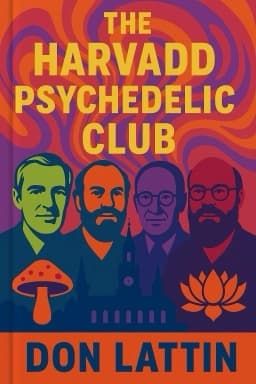
From Harvard to Woodstock: How Psychedelics Shaped Music, Art, and Spirituality
Why the club’s legacy still echoes in today’s culture, from music festivals to mindfulness apps.

The story of the Harvard Psychedelic Club is not just about academic rebellion—it’s about the birth of a cultural revolution. When Leary, Alpert, Smith, and Weil began their experiments, they had no idea they were planting the seeds for a movement that would reshape music, art, and spirituality in America and beyond.
By the mid-1960s, the ideas and slogans born in Harvard’s living rooms were everywhere. Musicians like The Grateful Dead, Jefferson Airplane, and The Beatles drew inspiration from psychedelic experiences, weaving themes of unity, transcendence, and self-discovery into their lyrics and soundscapes. Visual artists experimented with color, form, and perception, creating works that attempted to capture the ineffable beauty—and terror—of altered states. Yoga, meditation, and Eastern philosophies, once considered exotic, became part of the American mainstream, thanks in part to the spiritual journeys of club members like Ram Dass.
The movement was not without its challenges. The excesses of the counterculture led to backlash and new prohibitions. Yet, the core ideas—openness, exploration, and the search for meaning—endured. Today, we see their legacy in music festivals like Burning Man, in the rise of holistic health and wellness, and in the popularity of mindfulness apps and spiritual retreats. The club’s story is a testament to the power of vision and the enduring human desire to transcend the ordinary.
References: Goodreads, Literary Lotus, Blinkist
Want to explore more insights from this book?
Read the full book summary