
How Four Outsiders at Harvard Unleashed a Psychedelic Revolution (And Changed America Forever)
The untold story of the unlikely quartet who shaped a generation’s mind—and legacy.

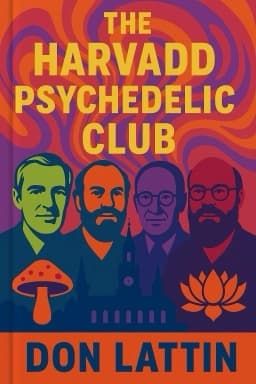
Picture the ivy-covered walls of Harvard in the early 1960s—a place of tradition, privilege, and expectation. Now imagine four men, each from a different world, crossing paths in this unlikely setting. Timothy Leary, the charming psychologist with a troubled past; Richard Alpert, the brilliant but restless academic searching for belonging; Huston Smith, the gentle scholar of religion; and Andrew Weil, the precocious student-journalist. Together, they would ignite a revolution that would ripple through American life for generations.
Their story begins not with drugs, but with longing. Each man carried invisible wounds: childhood traumas, family secrets, and a yearning for something deeper. Harvard, for all its prestige, was also a crucible for radical ideas. When Leary returned from Mexico after a transformative mushroom experience, he brought back more than memories—he brought a new vision of reality itself. The Harvard Psilocybin Project was born, and soon the living rooms of Cambridge became sanctuaries for scientific and spiritual exploration. Researchers took the drugs alongside their subjects, shattering the barriers between scientist and participant. Empathy, humility, and awe became the new research ethics.
But with innovation came controversy. The inclusion of undergraduates, blurred boundaries between personal and professional, and growing media scrutiny led to a storm of institutional backlash. Faculty meetings turned tense, friendships frayed, and the administration made a historic decision: Leary and Alpert were dismissed, the first such firing in living memory. Yet, as the doors closed at Harvard, the story was only beginning. The quartet’s influence spread like wildfire—fueling the counterculture, inspiring musicians and artists, and introducing Eastern spirituality and holistic health to mainstream America.
The journey did not end with scandal. Each man forged a new path: Leary as a counterculture icon and political provocateur; Alpert as Ram Dass, beloved spiritual teacher; Smith as a bridge-builder between faiths; Weil as a pioneer of integrative medicine. Their legacies endure in today’s mindfulness movement, the resurgence of psychedelic research, and the ongoing quest for meaning. Their story is a reminder that the most profound revolutions begin not with answers, but with questions—and the courage to ask them.
Today, as psychedelics return to the scientific mainstream and new generations seek healing and purpose, the lessons of the Harvard Psychedelic Club are more relevant than ever. Their tale is both a cautionary warning and a beacon of hope: that transformation is possible, but it comes at a price—and that the search for truth is never finished.
References: NY Times, Goodreads, Literary Lotus, Blinkist
Want to explore more insights from this book?
Read the full book summary