
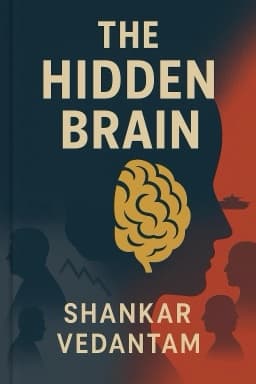
The Invisible Puppet Master: How Your Hidden Brain Controls Your World
Unveil the invisible forces steering your thoughts, emotions, and actions.

Imagine a puppet master pulling strings behind the scenes, directing every move and reaction without the puppet’s awareness. This is the hidden brain — the unconscious mind that shapes our thoughts, emotions, and behaviors in ways we rarely perceive. Shankar Vedantam’s 'The Hidden Brain' pulls back the curtain on this invisible force, revealing its profound impact on our lives.
From the subtle increase in honesty triggered by images of watching eyes to the powerful sway of unconscious mimicry in social interactions, the hidden brain operates like an invisible guide. It nudges us toward cooperation, trust, and social bonding, often without our conscious consent.
Yet, this puppet master is not infallible. Mental disorders like frontotemporal dementia illustrate what happens when the hidden brain’s control falters, leading to social disconnection and moral confusion. These examples highlight how deeply embedded unconscious processes are in regulating our social lives.
Biases formed in early childhood shape our perceptions of race, gender, and privilege, creating invisible barriers that influence opportunities and relationships. Recognizing these hidden biases is the first step toward dismantling them.
Mindfulness and self-awareness provide tools to observe and understand these unconscious influences. By shining light on the hidden brain’s workings, we can regain agency, heal from past wounds, and build more optimistic futures.
The journey through the hidden brain invites us to embrace complexity, cultivate empathy, and approach life with gentle curiosity. It teaches that understanding the unseen forces within is key to unlocking our fullest potential.
Sources: Insights inspired by Shankar Vedantam’s 'The Hidden Brain' and contemporary psychological research. 1 2 4
Want to explore more insights from this book?
Read the full book summary