
Why You’re Not as Rational as You Think: Inside the Hidden Brain’s Influence
Explore the science behind why our brains often deceive us into irrational choices.

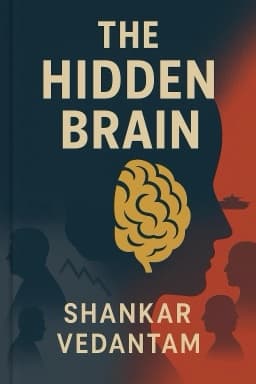
Humans cherish the idea that we are rational beings, carefully weighing options and making thoughtful decisions. Yet, the hidden brain quietly undermines this belief. Shankar Vedantam’s 'The Hidden Brain' exposes how unconscious mental processes often lead us astray, producing behaviors and judgments that defy logic.
One striking example is the confidence we place in our memories. Despite how certain we feel, eyewitness accounts are notoriously unreliable, often distorted by unconscious biases and emotional influences. A woman’s mistaken identification of her attacker, later disproved by DNA evidence, illustrates how false certainty can have devastating consequences.
Social conformity is another domain where rationality falters. In emergencies, individuals look to others for cues, sometimes freezing in place due to the bystander effect. This unconscious drive for harmony and safety can delay critical action, showing that our survival instincts sometimes conflict with reasoned choices.
The hidden brain also governs morality in surprising ways. Damage to specific brain regions can strip away emotional responses essential for ethical decisions, leaving patients to make cold, rational choices devoid of empathy. This reveals that morality is deeply rooted in unconscious emotional processing rather than pure logic.
Gender and racial biases further demonstrate how hidden mental processes shape social judgments. Women leaders face harsher scrutiny due to unconscious stereotypes, and racial biases influence everything from voting to sentencing in courts. These biases operate below awareness, challenging ideals of fairness and equality.
Understanding the hidden brain’s influence invites us to reconsider what it means to be rational. It encourages humility and awareness, reminding us that our minds are a complex interplay of conscious and unconscious forces. By recognizing these hidden processes, we can work toward better decisions, improved relationships, and a more just society.
References: Draws on Shankar Vedantam’s research and critical analyses from psychology and neuroscience. 2 3 4
Want to explore more insights from this book?
Read the full book summary