
Unlocking the Secrets of Human Societies: Why We Belong and How We Clash
Explore the profound forces that bind societies together and the invisible lines that divide us.

Human societies are more than just groups of cooperating individuals. At their core lies a shared identity, a powerful force that binds members together and sets boundaries against outsiders. Imagine standing in a bustling train station, surrounded by thousands of strangers. While you may not know most people personally, a sense of belonging to a larger whole persists. This feeling is the essence of society: a stable membership defined by collective identity and loyalty, not just cooperation.
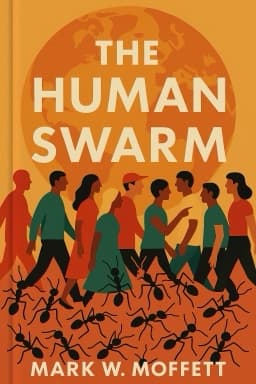
Scientific studies reveal that humans can maintain only about 150 close relationships, known as Dunbar's number. Yet, societies often encompass millions. This paradox is resolved by our ability to use anonymous markers—language, dress, rituals—that signal membership without personal acquaintance. Similar mechanisms exist in nature; for example, ants form supercolonies with billions of members, relying on chemical markers instead of individual recognition. This biological parallel highlights how societies can scale beyond cognitive limits by leveraging shared symbols.
Tracing back to our primate ancestors, simple vocalizations like pant-hoots served as early social markers, signaling group membership and strengthening bonds. Over time, these evolved into complex human languages and cultural symbols, enabling vast anonymous societies. However, this expansion of identity also brought psychological biases. Humans tend to perceive social groups as having fixed essences, leading to stereotyping and prejudice. These biases often operate unconsciously, influencing behavior and fueling intergroup conflict.
Yet, human societies uniquely balance cooperation with inevitable conflict. While many animal societies experience frequent skirmishes, humans can form alliances and trade networks beyond their immediate groups, showcasing unparalleled social complexity. Societies naturally undergo lifecycles of growth, division, and decline, often fracturing due to shifting identities or social stresses. Understanding these dynamics helps us grasp the fragility and resilience of social structures.
In the modern world, ethnic diversity and immigration challenge traditional notions of identity. Minority groups maintain distinct cultural markers within larger societies, enriching social fabric while posing integration challenges. The rise of global citizenship offers a hopeful path forward, as shared challenges foster broader identities transcending borders.
This journey through the nature of societies reveals the profound complexity and beauty of human social life, inviting us to reflect on our roles within the ever-changing swarm of humanity.
Want to explore more insights from this book?
Read the full book summary