
The Hunger Games: More Than Just a Survival Story — The Dark Truth Behind Panem’s Control
Unveiling the layers of oppression, survival, and hope in Suzanne Collins’ iconic dystopian saga.

At first glance, The Hunger Games might seem like a thrilling tale of survival — a fight for life in a brutal arena where only one can emerge victorious. Yet, beneath the surface lies a far more intricate and chilling commentary on power, control, and societal inequality. Suzanne Collins crafts a dystopian world where every element, from the electrified fences of District 12 to the televised spectacle of the Games, serves a deliberate purpose: to maintain the Capitol's iron grip over its people.
District 12, the poorest and most isolated of Panem’s districts, is a microcosm of oppression. The Seam, where the poorest residents live, is a place of desperation where illegal hunting becomes a necessary risk for survival. The electrified fence surrounding the district is a stark symbol — both a protective barrier against wild predators and a prison wall that confines its inhabitants. Here, the tesserae system forces families to enter their children’s names multiple times into the deadly reaping lottery in exchange for food rations, deepening the cycle of poverty and despair.
Within this harsh environment, the characters come alive not just as fighters but as symbols of resilience and sacrifice. Katniss Everdeen’s decision to volunteer for her sister is a profound act of love that sets the entire saga in motion. Peeta Mellark’s secret kindness with the gift of bread adds layers of complexity to their relationship, blending survival with compassion. Their mentor, Haymitch Abernathy, embodies the scars left by the Games — a reluctant guide battling his own demons.
The Hunger Games themselves are a spectacle of control. Originating as punishment for rebellion, the Games turn children into pawns in a deadly political theater. The reaping ceremony, with its weighted lottery system, highlights systemic inequality. Volunteering to take a tribute’s place is rare and seen as an act of bravery, underscoring the pervasive fear that grips the districts.
Survival in the arena demands a blend of physical skill, strategic alliances, and mental resilience. Katniss’s hunting expertise and knowledge of edible plants give her an edge, while alliances, like her bond with Rue, illustrate the fragile nature of trust in a fight to the death. The psychological toll is immense, with fear and isolation threatening to break even the strongest spirits.
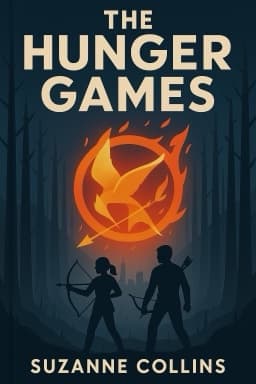
Yet, it is the power of symbols that elevates the narrative. The mockingjay, a hybrid bird born from Capitol experiments, becomes a beacon of unintended resistance and hope. The three-finger salute, a silent gesture of defiance and respect, spreads quietly among the districts, signaling unity and rebellion. Katniss and Peeta’s fiery entrance into the Capitol, with costumes that literally blaze, challenges the Capitol’s narrative and captivates the audience.
Media manipulation plays a crucial role in the Games. Stylists craft tributes’ images to win public favor and sponsors, whose gifts can mean life or death. This spectacle blurs the line between reality and performance, adding a layer of complexity to the tributes’ struggle.
The emotional and moral battles are as fierce as the physical ones. Katniss wrestles with the ethics of killing and the desire to maintain her humanity amid overwhelming cruelty. Psychological stress shapes decisions, alliances, and ultimately, the outcome of the Games.
By the story’s end, Katniss emerges as a symbol of hope and rebellion. The mockingjay pin transforms from a simple token into a rallying emblem for resistance. Small acts of defiance ignite a larger movement, sowing the seeds for change in Panem’s oppressive regime.
In essence, The Hunger Games is a richly layered tale that explores the intersection of survival, power, and hope. It forces readers to confront uncomfortable truths about inequality and control while inspiring courage and resilience. Its enduring popularity lies in this profound blend of thrilling narrative and meaningful social commentary.
For those who seek to understand the deeper messages woven into this dystopian masterpiece, this exploration reveals why The Hunger Games remains a powerful cultural touchstone and a call to question the systems that govern us.
Sources: SparkNotes on The Hunger Games themes and character analysis, Aithor essay on dystopian literature comparisons, Athena Commons paper on media and power dynamics in the trilogy 1 2 4
Want to explore more insights from this book?
Read the full book summary