
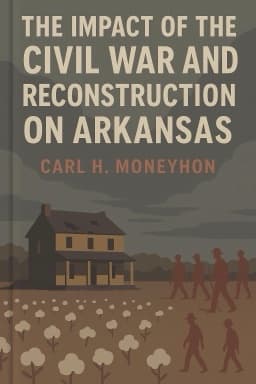
The Long Shadow of Cotton: Arkansas’s Post-Reconstruction Struggles and Survival
How Arkansas’s antebellum legacies shaped its difficult road through the late 19th century

As Reconstruction faded, Arkansas faced a future shaped by both change and continuity. The antebellum planter elite, though diminished, largely retained economic and political dominance by adapting to the new realities.
Cotton remained king, its cultivation central to the economy despite repeated disasters and market fluctuations. This monoculture limited diversification and entrenched economic fragility, tying farmers to cycles of debt and dependency.
Racial segregation and economic inequality persisted, with freedmen facing legal and social barriers despite formal freedom. Tenant farming and sharecropping became common, often mirroring the exploitative labor relations of slavery in new forms.
This legacy of resilience amid hardship shaped Arkansas’s social and economic trajectory well into the 20th century. Understanding these continuities offers insight into the challenges and hopes that defined the state’s development.
For further exploration of Arkansas’s post-Reconstruction era, see cotton industry histories and academic analyses from Henderson State University and cotton heritage organizations 3 , 4 .
Want to explore more insights from this book?
Read the full book summary