
This Surprising Reason Your Sadness Might Start in Your Immune System
How the Body’s Ancient Defenses May Shape Modern Minds

How the Body’s Ancient Defenses May Shape Modern Minds
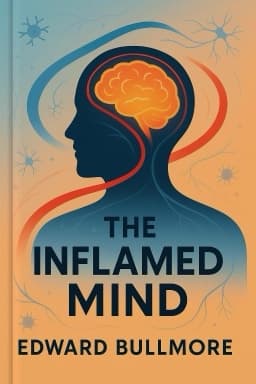
For centuries, doctors and philosophers alike have drawn a sharp line between the mind and the body. The mind, they said, was a world of thoughts and feelings; the body, a realm of cells and chemicals. But what if this division is not only false, but harmful? In his revolutionary book The Inflamed Mind, psychiatrist Edward Bullmore offers a radical new perspective: that depression may not just be a mental illness, but a physical one, rooted in the immune system’s response to stress and injury.
Consider this: when you catch the flu, your body aches, your energy plummets, and even your mood sours. Why? It’s not just the virus—it’s your immune system, flooding your body with inflammatory chemicals called cytokines. These molecules, designed to fight infection, also reach your brain, making you feel tired, withdrawn, and even depressed. For many, this state passes with the illness. But for some, especially those with chronic inflammation—from autoimmune diseases, obesity, or even long-term stress—these signals never fully switch off. The result? A lingering, low mood that resists traditional treatments.
Recent studies have shown that people with high levels of inflammation are more likely to develop depression. In fact, anti-inflammatory drugs—originally designed for arthritis—sometimes lift mood faster than antidepressants. In animal experiments, injecting inflammatory agents triggers behaviors eerily similar to human depression: lethargy, social withdrawal, loss of pleasure. Human volunteers given vaccines often report feeling low and tired, with brain scans revealing changes in emotion-processing regions. This isn’t just coincidence—it’s biology in action.
Yet, for decades, mainstream psychiatry ignored these clues. The legacy of 'dualism'—the belief that mind and body are separate—still shapes how hospitals are built, how doctors are trained, and how patients are treated. But as Bullmore and a new wave of scientists show, the wall between mind and body is crumbling. Depression, it turns out, may be the body’s way of telling us something is wrong—not just in our thoughts, but in our cells.
So what can we do? First, we can approach depression with greater compassion, recognizing that it’s not a personal failing, but a complex medical condition. Second, we can demand better, more integrated care—where mental and physical health are treated together. And finally, we can look forward to a future where blood tests, brain scans, and personalized medicine make depression as treatable as any other chronic illness.
In the end, understanding the immune system’s role in depression offers hope—not just for new treatments, but for a kinder, more holistic view of what it means to suffer, and to heal.
1
3
4
Want to explore more insights from this book?
Read the full book summary