
How Animals Sense Danger and Adapt: The Incredible Survival Skills You Didn’t Know Existed
From sensing volcanic eruptions to visiting 125,000 flowers, animals’ sensory worlds are astonishing.

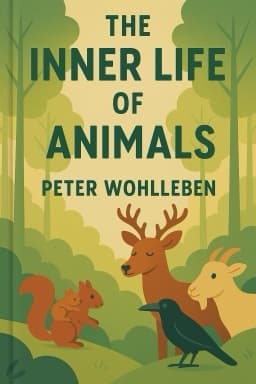
Animals possess sensory adaptations that far exceed human capabilities, enabling them to navigate complex environments and survive numerous challenges. Peter Wohlleben’s The Inner Life of Animals brings these hidden talents to light, revealing a world of extraordinary perception.
Bees, for example, must visit approximately 125,000 flowers to produce just one ounce of honey. This feat requires exceptional memory, spatial awareness, and planning, as they navigate vast areas to collect nectar efficiently. Such behavior demonstrates cognitive sophistication previously underestimated in insects.
Some animals also have the remarkable ability to sense natural disasters before they occur. Goats have been observed reacting to volcanic gases, and ants adjust their nesting behavior in response to seismic activity. These heightened senses provide early warnings that can save lives and maintain ecosystem balance.
Other sensory adaptations include olfactory communication used by dogs and wolves, visual camouflage employed by moths and other insects, and magnetic field sensing seen in birds and marine animals. These abilities allow animals to find food, avoid predators, and navigate long distances.
Understanding these sensory worlds enhances our appreciation of animal intelligence and highlights the critical need to protect natural habitats from human disruption.
Sources: 5 Minute Book Summary, Bookey, Four Minute Books, Blinkist 1 2 3 4
Want to explore more insights from this book?
Read the full book summary