
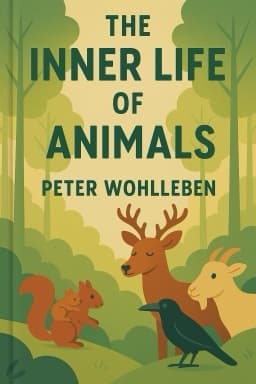
How Animals Talk, Think, and Feel: The Astonishing Social Intelligence You Never Knew About
From raven 'names' to squirrel deception, explore the complex social minds of animals.

Animals are not silent automatons; they are vibrant social beings with rich communication systems and complex social strategies. Peter Wohlleben’s The Inner Life of Animals sheds light on these remarkable behaviors, revealing a world of empathy, cooperation, and cunning deception.
Take ravens, for example. These birds use unique vocal calls that serve as individual 'names,' allowing them to recognize and remember each other. This ability indicates advanced social cognition and memory. Gray squirrels, meanwhile, use deceptive tactics by digging empty food caches when watched, misleading potential thieves and protecting their resources. Great tits take deception further by emitting false alarm calls to scare competitors away from food, illustrating strategic social manipulation.
Beyond deception, animals exhibit empathy and altruism. Stories of dogs nursing piglets or crows feeding orphaned kittens demonstrate cross-species caregiving, suggesting emotional depth and concern for others’ welfare. These behaviors highlight that animals are capable of emotional contagion, social bonding, and even moral-like behaviors.
Such social intelligence enriches animal communities and challenges the simplistic view of animals as mere instinct machines. Instead, they are thoughtful, emotional beings capable of forming meaningful relationships and navigating complex social landscapes.
Understanding these social minds invites us to respect animals as sentient individuals and reconsider how we interact with them in our shared environments.
Sources: 5 Minute Book Summary, Bookey, Four Minute Books, Blinkist 1 2 3 4
Want to explore more insights from this book?
Read the full book summary