
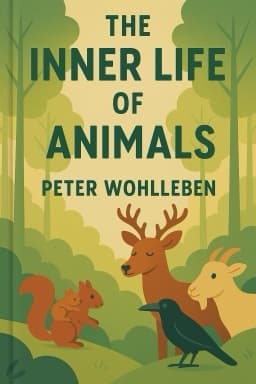
Unlocking the Secret Emotions of Animals: What Peter Wohlleben’s Book Reveals About Their Hidden Lives
Discover the astonishing emotional world of animals and how it challenges everything we thought we knew.

For centuries, humans have viewed animals primarily as instinct-driven creatures, lacking the emotional depth and consciousness that define our own experience. However, The Inner Life of Animals by Peter Wohlleben shatters this misconception, offering a compelling narrative supported by scientific research and personal observation that animals possess rich emotional worlds. This revelation not only changes how we perceive animals but also challenges us to rethink our ethical responsibilities toward them.
One of the most touching examples Wohlleben shares is the maternal devotion of animals. Squirrel mothers, for instance, carry up to six babies clinging around their necks, risking exhaustion to protect their young. This selfless behavior is backed by the hormone oxytocin, which bonds mother and offspring across many species, including humans. Such emotional connections go beyond mere instinct, revealing a profound capacity for love and care in the animal kingdom.
Moreover, the book delves into the neurological underpinnings of animal emotions. Brain imaging studies show that animals like goldfish have fear centers analogous to humans, and birds possess brain structures that perform cognitive functions similar to mammals. Even insects like fruit flies demonstrate REM sleep patterns indicative of dreaming. These findings dismantle the idea that complex emotions require a human-like brain, instead highlighting evolutionary continuity across species.
Wohlleben also explores the social intelligence of animals, showcasing behaviors such as empathy, altruism, and deception. Gray squirrels dig empty caches to mislead competitors, while great tits use false alarm calls to protect their food. Ravens use unique vocal calls functioning like 'names' to identify individuals, demonstrating advanced social cognition. These behaviors reveal that animals are not only emotionally complex but also capable of strategic thinking and social manipulation.
Human-animal relationships also feature prominently in the book. Domestication has created animals with heightened needs for affection and comfort, and working animals often show enthusiasm and satisfaction in their tasks. These bonds are based on mutual trust and respect, underscoring the emotional reciprocity possible between species.
Finally, Wohlleben reflects on mortality and grief in animals. Elephants, wolves, and ravens display mourning behaviors, while dogs and pigs exhibit signs of shame and regret. Recognizing these emotions calls for greater empathy and ethical treatment, reminding us that animals are sentient beings sharing our journey on this planet.
In conclusion, The Inner Life of Animals invites us to see animals as emotional, intelligent, and social beings. By understanding their inner lives, we can foster deeper connections and advocate for their welfare. This book is a must-read for anyone seeking to appreciate the richness of life beyond the human experience.
Sources: 5 Minute Book Summary, Bookey, Four Minute Books, Blinkist 1 2 3 4
Want to explore more insights from this book?
Read the full book summary