
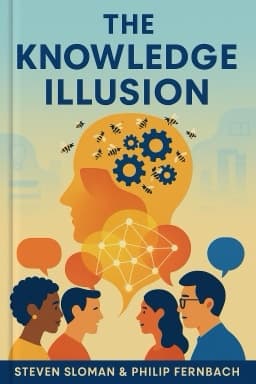
The Surprising Science of Not Knowing: Lessons from ‘The Knowledge Illusion’
Why your ignorance is the secret to smarter learning, better teamwork, and a more resilient society.
What if the key to wisdom wasn’t knowing more, but knowing what you don’t know? That’s the radical message at the heart of The Knowledge Illusion. Cognitive scientists Sloman and Fernbach reveal that, from the classroom to the boardroom, our greatest mistakes come from overestimating our own knowledge. But this isn’t a cause for despair—it’s a call to action. When we acknowledge our limits, we open ourselves to learning, collaboration, and growth 1 .
Consider the illusion of explanatory depth: most people think they understand how everyday objects work, but stumble when asked to explain them. This gap between perceived and actual knowledge is universal—and it’s what makes teamwork and teaching so powerful. Research shows that students learn best when they explain ideas to each other, debate, and build understanding together. The same principle applies in business and government: diverse groups that question, reflect, and share ideas outperform those that rely on a single ‘expert’ 2 .
But why do we fall for this illusion? The answer lies in how our brains evolved. Human memory is limited, so we rely on the world and each other as external storage. Think of a chef consulting a recipe, or a city planner relying on engineers and architects. This distributed cognition is what allows us to build airplanes, run cities, and invent the Internet. The downside is that we can become overconfident, especially in the age of Google, where answers are always a click away 4 .
The remedy? Embrace humility. The best learners and leaders are those who invite questions, admit what they don’t know, and encourage collaboration. In education, this means group projects, peer teaching, and open-ended inquiry. In organizations, it means fostering a culture where dissent is valued and mistakes are seen as opportunities to learn. The authors argue that recognizing our ignorance is the first step to building smarter, more adaptable communities 1 .
In sum, ‘The Knowledge Illusion’ isn’t just a book about what we don’t know—it’s a manifesto for lifelong learning. By turning ignorance into curiosity, and curiosity into action, we can create a world that’s wiser, kinder, and more resilient.
Want to explore more insights from this book?
Read the full book summary