
Why We Never Think Alone: How Collective Intelligence Shapes Everything We Do
From ancient tribes to modern teams, discover why your best ideas are never yours alone.

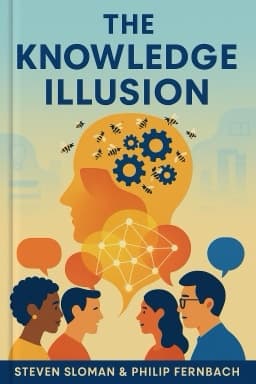
When you solve a problem at work, cook a new recipe, or vote in an election, you’re drawing on a web of knowledge that stretches far beyond your own mind. This is the heart of The Knowledge Illusion: intelligence is not an individual trait, but a collective achievement. Sloman and Fernbach argue that everything from language to technology is the product of distributed cognition—groups pooling their knowledge to solve problems no one could tackle alone 1 .
Think about the modern smartphone. No single person understands every component, from the microchips to the software. Yet, society builds and uses these devices effortlessly because experts in different fields collaborate, often without ever meeting. This principle scales up: cities, economies, and even scientific discoveries are the result of thousands, sometimes millions, of minds working in concert 4 .
But collective intelligence isn’t just for engineers and scientists. Families, sports teams, and online communities all benefit from sharing knowledge. The best decisions come from groups that value diverse perspectives, ask questions, and challenge assumptions. The authors warn, however, that the illusion of knowing can lead to groupthink and polarization if unchecked. Humility and openness are essential for harnessing the true power of collective intelligence 2 .
In the digital age, our networks are larger than ever. The Internet lets us learn, create, and solve problems together on a global scale. But it also requires us to be more discerning—recognizing the limits of our own knowledge and the importance of trustworthy sources. The future belongs to those who can collaborate, communicate, and keep learning together.
‘The Knowledge Illusion’ is a powerful reminder: your greatest strength is not what you know, but who you know—and how you learn together.
Want to explore more insights from this book?
Read the full book summary