
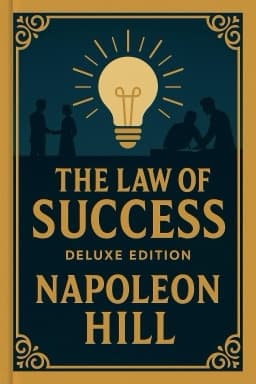
Think and Grow Rich EXPOSED: What They Don’t Tell You About Success!
A critical look at the myths and truths behind Napoleon Hill’s classic

Napoleon Hill’s Think and Grow Rich is often treated as a magic formula for instant wealth, but this perception oversimplifies a complex philosophy. Critics argue that the book overemphasizes the power of thought, sometimes neglecting external factors like economic conditions, privilege, and education.
One common myth is that simply thinking positively will bring riches. Hill himself cautions that desire and faith must be coupled with definite plans and persistent action. Without these, positive thinking is empty.
Another critique is the lack of empirical evidence and the anecdotal nature of Hill’s research. While his interviews with successful people are inspiring, they may not represent universal truths applicable to all.
Furthermore, some readers find that the book’s language and examples reflect its early 20th-century context, requiring careful adaptation to modern realities.
Despite these criticisms, many principles remain valuable when applied thoughtfully. The emphasis on goal-setting, overcoming fear, and collaboration aligns with validated psychological strategies.
Ethical considerations are also paramount; success achieved at the expense of integrity or others is hollow. Hill’s Golden Rule underscores this, but readers must interpret and apply it consciously.
Ultimately, ‘Think and Grow Rich’ is a starting point—a set of ideas to be tested, adapted, and integrated with personal values and circumstances.
This blog encourages readers to approach the book with both enthusiasm and critical thinking, extracting what works and discarding what doesn’t.
For balanced perspectives, explore critiques and analyses from diverse sources alongside Hill’s original text.
Sources: Cooler Insights, Napoleon Hill Official, Money Masterpiece, Secrets of Success 1 2 3 4
Want to explore more insights from this book?
Read the full book summary