
Why Giving Fewer Fcks Is the Ultimate Productivity Hack (And How to Start Today)
Unlocking Focus and Freedom With Sarah Knight's Revolutionary Advice

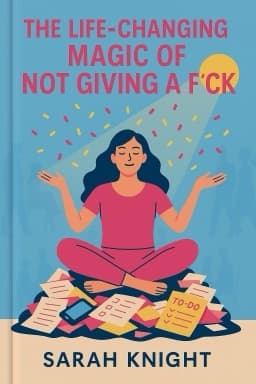
We live in a world that glorifies busyness. Our calendars overflow, our inboxes ping relentlessly, and our social feeds are a parade of people doing more, achieving more, and—let’s be honest—giving a lot of fcks about things that don’t really matter. Enter Sarah Knight’s The Life-Changing Magic of Not Giving a Fck, a book that’s become a cult classic for anyone desperate to reclaim their time, energy, and sanity. But what if I told you her advice isn’t just about feeling better—it’s the ultimate productivity hack?
At the heart of Knight’s philosophy is the 'Fck Budget.' Imagine your time, energy, and money as limited resources. Every time you say yes to something trivial—a pointless meeting, a social obligation you dread, a trend you don’t care about—you’re making a withdrawal from that budget. Eventually, you run out, and the things that truly matter—your creative work, your relationships, your health—get shortchanged.
So, how do you fix it? First, take inventory. List out all the things currently claiming your attention. Next, ask yourself: Which of these actually bring me joy, purpose, or progress? Separate the wheat from the chaff. Knight recommends using her NotSorry Method: 1) Decide what you don’t give a fck about, and 2) Stop giving a fck about those things—without apology.
For many, the workplace is the hardest place to implement this. But countless readers and productivity gurus have found that by politely declining unnecessary meetings, delegating tasks that don’t align with your goals, and communicating your boundaries clearly, you actually become more valuable—not less. You’re focused, present, and far less likely to burn out. As Knight puts it, 'The moment you decide to stop giving a fck is the moment you start living your best life.' 2 3
Of course, the fear is always that you’ll seem rude or unreliable. But Knight’s method emphasizes honesty and politeness. You can say no without being an 'asshole.' For example: 'Thanks for inviting me, but I have a personal policy of keeping my evenings free for family.' Most people respect clear, unapologetic boundaries—because they wish they could set them, too.
The ripple effects are huge. With fewer distractions, you’ll find yourself with more time for deep work, meaningful relationships, and self-care. Studies show that people who set boundaries report higher job satisfaction, lower stress, and even better sleep. 1
Ready to try it? Start small. Pick one thing this week to stop caring about—maybe it’s attending that optional meeting, or responding to every group text. Notice how it feels. Then, expand your 'not sorry' zone. Over time, you’ll find yourself more focused, more creative, and—yes—happier. The magic isn’t just in what you stop doing. It’s in what you finally have time to start.
So, next time your to-do list explodes or your calendar fills up, ask yourself: Is this worth a withdrawal from my Fck Budget? If not, let it go—and watch your productivity soar.
Want to explore more insights from this book?
Read the full book summary