
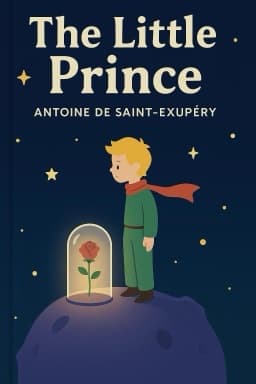
From Child’s Drawing to Timeless Classic: The Enduring Magic of 'The Little Prince'
Tracing the journey of a simple drawing to one of the most beloved books worldwide.

Few books have captured the hearts of readers across the world like Antoine de Saint-Exupery’s 'The Little Prince.' What began as a simple story born from the author’s own childhood experiences and aviation adventures has become a literary phenomenon translated into over 300 languages.
Saint-Exupery’s background as a pioneering aviator deeply influenced the story’s setting and themes. His own brushes with danger and solitude in the skies are echoed in the narrator’s desert crash and encounters with the Little Prince. The author’s artistic talents are evident in the book’s original illustrations, which add a delicate charm and intimacy to the text.
Over the decades, 'The Little Prince' has inspired countless adaptations—films, theater productions, and artworks—each interpreting its themes anew. Its universal appeal lies in its ability to speak to both children and adults, inviting readers to rediscover wonder and wisdom at any age.
Understanding the history behind this masterpiece enriches our appreciation of its message. It reminds us that great stories often arise from personal truths and that art and literature can transcend boundaries to touch the soul.
As we continue to share and revisit 'The Little Prince,' we participate in a legacy of love, imagination, and the eternal quest to see with the heart.
Want to explore more insights from this book?
Read the full book summary