
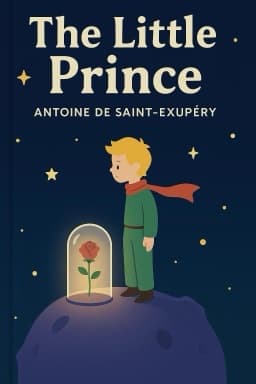
The Little Prince’s Cosmic Journey: A Stunning Critique of Adult Life You’ll Relate To
How a child’s journey through strange planets reveals the absurdities of grown-up priorities.

Antoine de Saint-Exupery’s 'The Little Prince' is not just a whimsical tale but a sharp social commentary wrapped in poetic prose. As the Prince travels from one tiny planet to another, he encounters adults whose behaviors reveal the absurdity of many human pursuits.
On one planet, a king rules over everything but has no subjects, illustrating the emptiness of authority without connection. Another is home to a conceited man who craves admiration yet is utterly alone. The tippler drinks to forget his shame, trapped in a cycle of self-destruction, while the businessman obsessively counts stars he claims to own but never enjoys.
The lamplighter’s ceaseless task of lighting and extinguishing lamps, despite the planet’s rapid rotation, symbolizes devotion to duty even when it seems pointless. The geographer’s detachment from the world he studies further highlights the disconnection between knowledge and experience.
This journey exposes the tension between adult confusion and childlike clarity. While adults rush about aimlessly, children remain curious and aware of what truly counts.
In a world often driven by superficial goals, 'The Little Prince' challenges us to look inward and rediscover the simple yet profound truths that give life meaning. It encourages a shift from empty pursuits to authentic connections and purpose.
Want to explore more insights from this book?
Read the full book summary