
Why Blockbusters Are Dead: Discover the Secret Power of Niche Markets
How the Internet Killed the Hit-Driven Economy and Unleashed Infinite Choice

How the Internet Killed the Hit-Driven Economy and Unleashed Infinite Choice
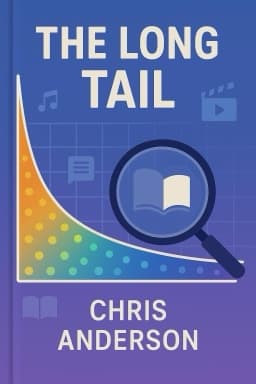
For decades, the world of business and culture was obsessed with blockbusters: the chart-topping albums, Hollywood megahits, and bestselling books that seemed to define our collective experience. But in the shadows of these giants, something extraordinary was happening. As Chris Anderson reveals in his seminal book The Long Tail, the digital era has quietly killed the hit-driven economy and opened up a universe of possibilities for niche markets and micro-communities.
The Long Tail theory is deceptively simple: in a world where shelf space is unlimited and distribution costs are near zero, selling a huge variety of less-popular items can be more profitable than focusing only on the bestsellers. Amazon, Netflix, and iTunes have proven this point again and again, discovering that the combined sales of their obscure titles often surpass those of their hits. In fact, more than a quarter of Amazon’s book sales come from titles you’d never find in a physical bookstore.
Why does this happen? The answer lies in the democratization of production and distribution. Anyone can now create a song, write a book, or design a product and reach a global audience. The old gatekeepers—publishers, record labels, and movie studios—have lost their monopoly on taste. Instead, algorithms, user reviews, and social recommendations guide us through abundance, helping us discover hidden gems that reflect our unique interests.
This isn’t just a business trend—it’s a cultural revolution. The waterline of culture has dropped, revealing a vast mountain of creativity beneath the surface. Indie musicians, self-published authors, and YouTube creators are thriving in ways that were impossible just a generation ago. For marketers, this means the end of one-size-fits-all campaigns. Success comes from building relationships with small, passionate communities and telling stories that resonate on a personal level.
So, what does this mean for you? Whether you’re a creator, entrepreneur, or curious consumer, the Long Tail invites you to explore, experiment, and connect. The future belongs to those who embrace abundance, diversity, and the power of serving the few, not just the many. The next big thing might not be a blockbuster at all—it could be a tiny niche, quietly changing the world from the bottom up.
Ready to dive deeper? Stay tuned for more insights on how to thrive in the Long Tail economy.
Want to explore more insights from this book?
Read the full book summary