
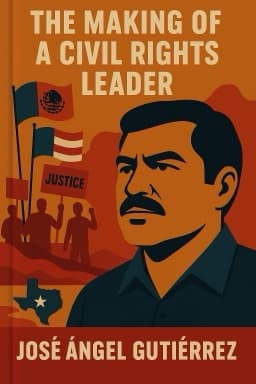
How One Man’s Fight Against Language Suppression Sparked a Cultural Revolution
Explore the critical role of language in shaping cultural identity and resistance in the Chicano Movement.

Introduction: Language as a Site of Struggle
Language is more than words; it is the heartbeat of culture and identity. For Mexican Americans in mid-20th century Texas, speaking Spanish was a radical act — one that could lead to punishment and shame. José Angel Gutiérrez’s story illuminates this linguistic battleground, where children were punished for their mother tongue, and yet, from this repression, a new cultural expression emerged.
School Punishments and Cultural Alienation
Imagine a classroom where speaking Spanish is forbidden, and children are paddled or suspended for uttering a word in their native language. This harsh reality was common, designed to enforce assimilation and erase cultural heritage. The psychological toll was immense — many children felt ashamed of their language and culture, creating a rift between home and school.
The Birth of Spanglish: Resistance Through Language
Out of this tension arose Spanglish — a vibrant, hybrid language blending English and Spanish. Far from a corruption of language, Spanglish became a symbol of resilience and cultural fusion. It allowed Mexican Americans to navigate multiple worlds, asserting their identity on their own terms.
Gutiérrez’s personal experience with language punishment and his embrace of bilingualism reflect a broader cultural movement that challenged dominant narratives and demanded recognition.
Bilingual Education as Empowerment
In response to language suppression, pioneering bilingual education programs emerged, often led by community activists and dedicated teachers. These programs provided students with the tools to succeed academically without sacrificing their cultural roots. Gutiérrez’s own schooling included early bilingual instruction that laid the foundation for his later activism.
Language and Political Organizing
Language also played a crucial role in political mobilization. Campaigns and community meetings often used Spanish to reach wider audiences, and Spanish-language media became a tool for education and empowerment. The ability to communicate across linguistic lines strengthened the Chicano Movement’s reach and impact.
Gutiérrez’s leadership exemplified this strategy, blending cultural pride with political savvy to build a powerful movement.
Conclusion: The Lingering Legacy
The fight against language suppression is more than historical; it continues to resonate today as communities navigate identity in a multicultural society. Gutiérrez’s story reminds us that language is a vital part of cultural survival and political power.
By understanding this history, we honor the resilience of those who refused to be silenced and celebrate the rich tapestry of language that shapes who we are.
Want to explore more insights from this book?
Read the full book summary