
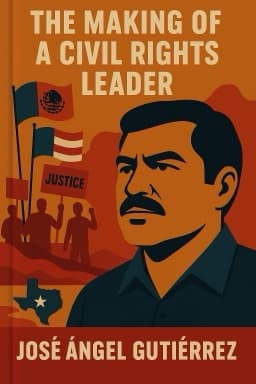
Unveiling the Untold Story: How a Chicano Militant Changed Texas Forever
Discover the riveting journey of José Angel Gutiérrez, the architect of Chicano political empowerment in Texas.

Introduction: The Making of a Movement
In the heart of Texas, amidst the dusty barrios and segregated schools, a young boy grew up living three lives — Mexican at home, Anglo at school, and Chicano in the streets. This complex identity shaped José Angel Gutiérrez’s journey from a child punished for speaking Spanish to a fiery leader who would change the political landscape for Mexican Americans forever.
The Three Me’s: Navigating Identity
The struggle to reconcile multiple identities is central to Gutiérrez’s story. At home, he was immersed in Mexican traditions and language, but at school, he was forced to abandon his native tongue and culture. This painful dissonance led to the creation of a Chicano identity — a radical fusion born from exclusion and pride. Language became a battleground, but also a source of strength, as Spanglish emerged as a symbol of resistance.
His experiences highlight the broader challenges faced by Mexican Americans in mid-20th century America, where assimilation was demanded but acceptance was withheld. These early lessons in identity laid the groundwork for his later activism.
Education as a Battlefield and Gateway
Schools were more than places of learning; they were arenas of cultural conflict. Segregation and discrimination were rampant, with Mexican American children relegated to inferior classrooms and punished for their language and heritage. Yet, despite these barriers, Gutiérrez excelled academically, winning state public speaking contests and challenging stereotypes.
His early political engagement, including manipulated student elections, taught him the importance of representation and grassroots organizing. Education became both a tool of oppression and a pathway to empowerment, fueling his commitment to social justice.
Family Roots and Cultural Pride
Behind every activist is a foundation of family and tradition. Gutiérrez’s upbringing was rich with cultural teachings — from his father’s legacy as a doctor and mayor in Mexico to his grandmother’s outdoor cooking and traditional skills. This nurturing environment fostered bilingualism, cultural pride, and resilience, equipping him with the strength to face external challenges.
Family stories, outdoor life, and celebrations intertwined to create a strong sense of identity that propelled his activism. The blending of heritage and adaptation to new environments underscored the complexity of Mexican American experience.
From Student Politics to Community Power
Gutiérrez’s political awakening came through grassroots organizing and electoral victories. The historic election of 'Los Cinco Candidatos' in Crystal City demonstrated the power of community mobilization against entrenched Anglo political control. Selling poll taxes, forming youth organizations like MAYO, and founding the Raza Unida Party were strategic moves that reshaped Texas politics.
These efforts were not without risk — activists faced intimidation and violence — but their courage sparked a movement that redefined governance and representation for Mexican Americans.
Personal Passions Fueling the Movement
Beyond politics, personal passions such as cooking and camping nurtured cultural pride and community bonds. Traditional field cooking skills taught by his grandmother became symbols of heritage and resilience. Political cookouts and shared meals served as vital moments for solidarity and morale in the movement.
This blending of culture and activism illustrates how everyday life sustains social change, reminding us that movements are human and communal at their core.
Academic Pursuits and Legal Advocacy
Higher education expanded Gutiérrez’s impact, despite facing racism and hostility. His leadership in forming PASO chapters and organizing campus protests connected scholarship with activism. Earning advanced degrees provided the legal knowledge to challenge discriminatory laws and defend civil rights in courtrooms and communities.
His legal work bridged grassroots activism and formal justice systems, demonstrating how education and law serve as powerful tools for systemic change.
Legacy of Leadership and Mentorship
Institution-building and mentorship defined the next phase of his journey. Co-founding influential organizations and mentoring young activists ensured the continuity and growth of the Chicano Movement. Recognitions and academic appointments validated decades of struggle and inspired pride within the community.
Leadership is portrayed as a collective, intergenerational effort, emphasizing the importance of passing knowledge and fostering new leaders.
Resilience and Hope: The Ongoing Journey
The final chapter reflects on the mindset that transformed adversity into opportunity. Gutiérrez’s resilience amid personal and societal challenges offers a powerful lesson in optimism and perseverance. Complex identities continue to evolve, with terms like 'Blaxican' illustrating ongoing cultural fusion.
His call to action urges new generations to embrace leadership and govern their communities with courage and pride, ensuring the fight for justice endures.
Conclusion: A Blueprint for Change
José Angel Gutiérrez’s life is a testament to the power of identity, education, and activism. His story teaches us that cultural complexity can be a source of strength, that grassroots organizing can reshape political realities, and that resilience in the face of adversity is essential for social progress. This autobiography is not only a historical record but a call to action for anyone committed to justice and equality.
May his journey inspire us to see our own challenges as windows of opportunity and to build communities where all voices are heard and valued.
Want to explore more insights from this book?
Read the full book summary