
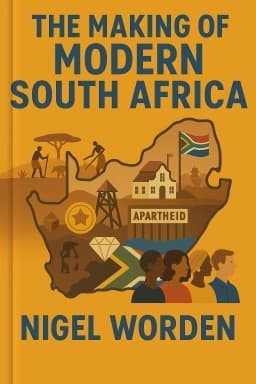
Unveiling South Africa's Hidden History: From Ancient Roots to the Mineral Boom
Explore the rich and diverse origins of South Africa before European colonization reshaped the land.

South Africa's story begins long before the arrival of European colonists.
Alongside the San were the Khoekhoe pastoralists, who introduced livestock herding around a millennium ago. This shift from foraging to pastoralism transformed social organization, land use, and trade networks. Herding cattle and sheep required new forms of cooperation and territorial control, leading to evolving political structures.
Between AD 300 and 1000, Bantu-speaking farmers migrated southward, bringing with them iron-working technology and crop cultivation. Their arrival introduced new agricultural practices and more centralized chiefdoms, which traded extensively with neighboring groups. This period saw the emergence of complex societies that adapted to varied landscapes, from fertile river valleys to rugged highlands.
Understanding this deep history allows us to appreciate the resilience and adaptability of South Africa's peoples. It also reminds us that the land was never empty or undeveloped but a vibrant space of human creativity and survival.
As we move forward, the next chapter explores how European colonial expansion unsettled this balance, introducing new forces that would reshape the continent and its people.
Want to explore more insights from this book?
Read the full book summary