
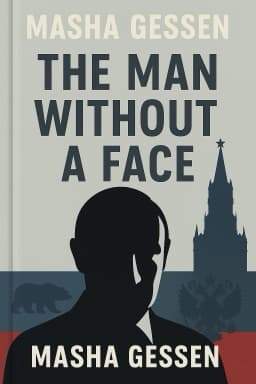
Inside the Shadow: How Vladimir Putin Rose from Obscurity to Russian Powerhouse
Discover the untold story of Putin's early life, KGB years, and the calculated steps that led him to become Russia’s most powerful leader.

Few political figures have captivated and confounded the world like Vladimir Putin. His rise from a modest childhood in the shadow of a war-torn Leningrad to the pinnacle of Russian power is a story steeped in resilience, secrecy, and strategic mastery. This journey is not just a biography but a window into the complex forces that shaped modern Russia.
Born in 1952, Putin’s early years were marked by the harsh realities of a city recovering from one of the deadliest sieges in history. The siege left a deep imprint on the collective psyche of the city’s inhabitants, instilling a survivalist mentality and a hardened spirit. The communal living conditions and the struggles of his family forged in him a fierce resilience and a pragmatic worldview. His training in Sambo and judo was not merely sport but a formative discipline that taught him control and strength, qualities that would define his later career.
From these humble beginnings, Putin embarked on a path into the secretive world of the KGB. His years in intelligence were spent in environments that demanded patience, adaptability, and above all, discretion. Posted in East Germany, he experienced firsthand the intricate dance of espionage amid Cold War tensions. The KGB, often portrayed as a monolithic spy agency, was in reality a sprawling bureaucracy rife with inefficiencies, but it was within this structure that Putin honed his skills in observation, influence, and control.
As the Soviet Union collapsed, Russia plunged into chaos. The 1990s were a decade of economic collapse, political instability, and social disillusionment. Boris Yeltsin’s faltering health and erratic leadership created a power vacuum that many feared would lead to further fragmentation. It was in this turbulent environment that Putin quietly positioned himself as a stabilizing force. His rise was aided by oligarchs who controlled vast wealth and media influence, and by a public desperate for order and national pride.
The turning point came with a series of tragic apartment bombings that terrorized the nation. Whether orchestrated by the secret police or exploited by them, these events galvanized public demand for strong leadership. Putin’s tough rhetoric and promises to hunt down terrorists resonated deeply, and the state-controlled media crafted an image of him as a decisive, incorruptible leader.
In a dramatic New Year’s Eve announcement, Yeltsin resigned, handing Putin the reins as acting president. This sudden transfer of power gave Putin the advantage of incumbency, enabling a carefully managed election campaign that eschewed traditional rallies for media dominance. The opposition was fragmented and marginalized, ensuring Putin’s decisive victory and the beginning of a new political era.
With power consolidated, Putin moved swiftly to suppress dissent. Independent media were shut down or bought out, opposition leaders faced legal harassment, and civil society was tightly controlled. The transformation from a fledgling democracy to an authoritarian state was rapid and profound.
Simultaneously, a kleptocratic elite emerged, fusing political power with vast personal wealth. Lavish palaces, luxury yachts, and exclusive parties became symbols of a regime defined by excess and corruption. This fusion of state and business interests deepened inequality and eroded public trust, yet it secured loyalty within the ruling class.
Nationalism and Soviet nostalgia were revived to legitimize the regime and unify the population. Soviet symbols reappeared, patriotic education was emphasized, and media narratives portrayed Russia as a besieged fortress. This reimagining of history served to justify repression and aggressive foreign policies.
Looking back, Putin’s rise is a complex tale of power, perception, and pragmatism. His image was as much a product of public projection as personal ambition. The legacy is a stable yet authoritarian Russia, with a delicate balance between order and freedom. Understanding this journey offers crucial insights into the nature of leadership, the fragility of democracy, and the enduring dynamics of power.
For anyone seeking to grasp the forces shaping Russia today, this story is essential — a reminder that history is often written in shadows and that the truth behind power is rarely simple.
Sources: The New Tsar by Steven Lee Myers, Putin and the Rise of Russia by Michael Stürmer, New Statesman’s Best Books on Putin 1 2 4
Want to explore more insights from this book?
Read the full book summary