
The Emotional Economy: How Feelings Became a Job Requirement
Explore how the rise of the service economy transformed emotions into a marketable skill and the implications for workers.

In today’s service-driven economy, feelings have become a form of currency.
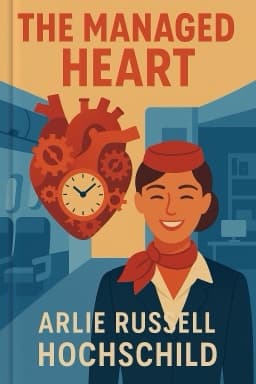
Flight attendants, often the poster children for emotional labor, exemplify this trend. Their training emphasizes not only safety and technical skills but also the ability to project warmth and calm under pressure. Their smiles and reassurances are part of the airline’s product, carefully managed to create a positive customer experience.
\However, this commodification comes at a cost. Emotional labor can lead to exhaustion, as workers suppress genuine feelings to maintain a professional facade. This emotional dissonance can cause burnout, stress, and a sense of alienation from one’s authentic self.
\ \Gender plays a significant role in emotional labor. Women often perform more emotional labor, both in paid jobs and unpaid caregiving roles, reflecting societal expectations of femininity. Men in female-dominated sectors must navigate conflicting norms, balancing professionalism with gendered expectations.
\Social status also influences emotional labor. Higher-status employees may use emotional regulation to assert authority, while lower-status workers often bear more direct emotional demands from customers.
\To thrive in this emotional economy, cultivating emotional intelligence—the ability to recognize, understand, and manage emotions—is crucial. Organizations must also recognize emotional labor’s value and provide support to mitigate its costs.
\ \Understanding emotional labor as both a skill and a burden helps us appreciate the complex interplay between economy, culture, and human feeling. It challenges us to rethink how work is defined and valued in the 21st century.
\ \Want to explore more insights from this book?
Read the full book summary