
Why Emotional Labor Is the Invisible Work That’s Draining You (And How To Reclaim Your Feelings)
Discover the hidden emotional costs of everyday work and learn how to protect your authentic self in a demanding world.

Have you ever felt exhausted after a day of smiling, soothing, or simply managing your emotions for others? You’re not alone. Emotional labor, a term coined to describe the process of managing feelings to fulfill the emotional expectations of a job or social role, is the hidden work that many perform daily without recognition.
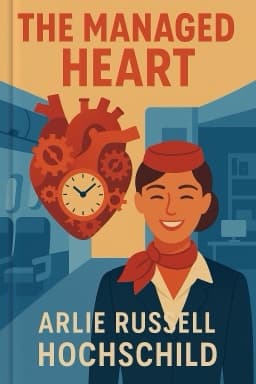
Originating from the study of flight attendants who were trained to maintain cheerful demeanors regardless of their true feelings, emotional labor has since been identified as a pervasive aspect of modern work life. Approximately one-third of workers in the United States engage in jobs requiring significant emotional labor, with women disproportionately represented. This imbalance reflects longstanding gender roles that assign emotional management as a feminine skill, both in the workplace and at home.
\But what exactly does emotional labor entail? It involves two primary techniques: surface acting and deep acting. Surface acting is the outward display of emotions that may not be genuinely felt—like forcing a smile during a stressful encounter. Deep acting, in contrast, involves changing inner feelings through imagination or reframing, such as recalling a kind memory to genuinely feel empathy. Both forms of acting come with psychological costs, from emotional exhaustion to feelings of inauthenticity.
\ \Feeling rules—the unspoken cultural norms dictating which emotions are appropriate in given contexts—further complicate this labor. These rules vary by culture, social setting, and even timing, guiding individuals on when and how intensely to feel emotions like grief, joy, or anger. Violating these rules can lead to social sanctions or personal discomfort, prompting more emotional regulation.
\In the service economy, emotional labor is commodified. Companies train workers to manage their emotions to enhance customer satisfaction and brand loyalty. Flight attendants, for example, are expected to project warmth and calm, turning their feelings into a marketable asset. Yet this commodification often invisibilizes the emotional costs borne by workers, who may face burnout and alienation without adequate support.
\ \Gender and social status deeply influence emotional labor dynamics. Women take on more emotional work, both professionally and privately, leading to greater emotional strain. Men in female-dominated roles navigate unique challenges, balancing societal expectations of masculinity with emotional demands. Higher-status workers may perform emotional labor differently, often to assert authority rather than simply to soothe others.
\The cumulative effect of sustained emotional labor challenges our sense of authenticity. Many find themselves estranged from their true feelings, donning emotional masks to protect themselves from commercial and social pressures. This concealment can fragment identity and foster emotional fatigue. However, there is a growing cultural movement to preserve spontaneous, natural feelings as precious resources, resisting the commodification of emotions.
\ \Recognizing emotional labor as real work is the first step toward healing. By understanding its techniques, cultural rules, and social dynamics, individuals and organizations can foster environments that value emotional authenticity and provide support. Whether through policy changes, training, or personal boundaries, reclaiming emotional health is possible.
\This journey through emotional labor invites us to rethink how we value feelings, work, and ourselves. It is a call to honor the invisible work that shapes so many lives and to nurture compassion—for others and for ourselves.
\ \Want to explore more insights from this book?
Read the full book summary