
Charles Dickens’ Novels Memorized in a Walk? Yes, Here’s How!
Transform your favorite walks into powerful memory journeys to master Dickens’ 20 novels effortlessly.

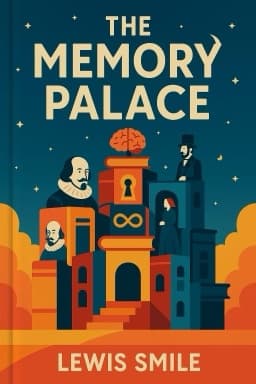
Charles Dickens wrote 20 novels filled with rich characters and stories, but memorizing their titles can be challenging. The Memory Palace technique offers a simple yet powerful solution: turn a familiar route—your daily walk, a park path, or your home—into a mental journey where each stop holds a vivid, bizarre image representing a novel.
For example, imagine starting your journey at a street corner where newspapers burn like candles, symbolizing 'Pickwick Papers.' Further along, a dizzy boy spinning with olives represents 'Oliver Twist,' and Nicholas Cage flipping a nickel stands for 'Nicholas Nickleby.' Each image is designed to be absurd, colorful, and sensory-rich, making it impossible to forget.
Choosing a route you know well reduces mental effort, letting you focus on creating strong associations. Adding sensory details—sounds, textures, smells—and emotional elements strengthens memory encoding.
Active recall—mentally walking your route and retrieving images—and self-testing are essential to reinforce memories and identify gaps. This practice transforms memorization from a task into a joyful exploration.
By crafting your own Memory Palace for Dickens’ novels, you not only memorize titles but deepen your appreciation of the stories. This approach is perfect for students, literature enthusiasts, and anyone seeking to enhance their memory skills.
Start your journey today and see how a simple walk can unlock a world of knowledge.
References: Based on Lewis Smile’s Memory Palace method and modern memory research on spatial anchoring and sensory imagery.
[[0]](#__0) [[1]](#__1)
Want to explore more insights from this book?
Read the full book summary