
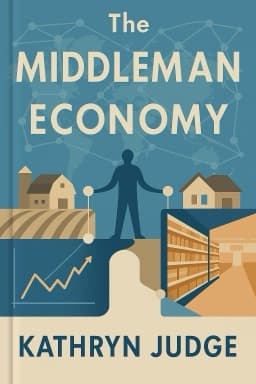
Why Middlemen Rule Our Economy More Than Ever — And What That Means for You
Discover the invisible forces shaping your everyday purchases and how middlemen quietly control markets in ways you never imagined.

Every time you buy a product, whether it's a chocolate bar, a fresh vegetable, or a new gadget, there’s a hidden story behind that transaction.
Contrary to popular belief, the internet hasn't eliminated middlemen; in many cases, it has empowered them. From giant retailers like Walmart and Amazon to real estate agents and financial intermediaries, middlemen have expanded their reach and influence. They help coordinate complex supply chains, negotiate prices, and provide convenience, but they also create distance between producers and consumers, sometimes obscuring accountability.
Take the food industry as an example. Most Americans' food travels thousands of miles and passes through numerous middlemen before reaching their plates. While this specialization and scale bring efficiency, it also makes the system fragile and disconnected. The story of a foodborne illness outbreak linked to cantaloupe shows how long, complex supply chains can delay tracing contamination sources, endangering public health.
Retail giants like Walmart have revolutionized shopping by offering low prices and vast selection, but their dominance also pressures suppliers and concentrates market power. Amazon’s rise as an online marketplace further entrenches this dynamic, with its Prime membership locking millions into its ecosystem. These companies’ mastery of logistics and data analytics allows them to shape consumer behavior, often encouraging overconsumption and economic insecurity.
Yet, there is hope. Community Supported Agriculture (CSA) and direct exchange models reconnect consumers with producers, fostering trust, healthier eating, and stronger communities. These models remind us that exchange is more than a transaction—it’s an opportunity for connection and meaning.
Understanding the middleman economy is crucial for navigating modern markets and advocating for policies that promote transparency, equity, and sustainability. By recognizing the power and pitfalls of middlemen, consumers can make more informed choices and support systems that build resilience and shared prosperity.
For a deeper dive into these ideas, including real-life examples and policy insights, keep reading our series exploring the many facets of the middleman economy.
Sources: Amazon book listing and reviews, EconTalk interview with Marina Krakovsky, Goodreads reader discussions 1 , 2 , 3
Want to explore more insights from this book?
Read the full book summary