
What If You Could Undo Every Regret? The Midnight Library’s Mind-Bending Journey
How Matt Haig’s Novel Inspires Us to Rethink Our Choices and Embrace Possibility

How Matt Haig’s Novel Inspires Us to Rethink Our Choices and Embrace Possibility
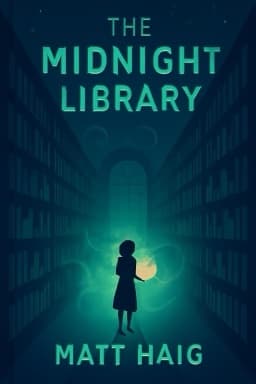
Imagine standing at the crossroads of your own life, every regret and every what-if stretching out before you like endless shelves in a mystical library. This is the premise of Matt Haig’s The Midnight Library, a novel that has captivated readers worldwide with its blend of fantasy, philosophy, and raw emotional honesty. At the heart of the story is Nora Seed, a woman who feels she has failed at everything—her career, her relationships, even her own happiness. On the brink of giving up, she finds herself in the Midnight Library—a liminal space between life and death, where every book offers a chance to live a different life, to undo a regret, to see what might have been.
Haig’s narrative is both comforting and challenging. The library is presided over by Mrs Elm, a gentle librarian from Nora’s childhood, who guides her through the maze of possibilities. Each life Nora tries on—whether as a rock star, Olympic swimmer, or Arctic scientist—teaches her something vital about herself and the nature of happiness. The novel’s structure echoes the very theme it explores: that life is not a single, irreversible path, but a branching web of choices. Readers are drawn into Nora’s emotional landscape, feeling the sting of regret, the thrill of new beginnings, and the slow, healing power of acceptance.
One of the most powerful messages of the book is that there is no perfect life. Every existence comes with its own set of joys and sorrows, and the grass is not always greener on the other side. In one life, Nora achieves fame but feels isolated; in another, she finds love but faces loss. Through these experiences, the novel gently dismantles the myth that happiness lies in changing our circumstances alone. Instead, it suggests that meaning is found in the ordinary—in small acts of kindness, in forgiveness, in the courage to keep going even when hope feels far away.
The Midnight Library also tackles mental health with sensitivity and realism. Nora’s depression is depicted not as a passing sadness but as a deep, persistent fog. The book doesn’t offer easy answers, but it does offer hope: the idea that healing is possible, and that even the smallest steps—reaching out to a friend, caring for a pet, forgiving oneself—can spark change. Haig draws on his own experiences, making the narrative both authentic and relatable for anyone who has struggled with despair or self-doubt.
Critics and readers alike have praised the novel’s ability to blend big ideas with heartfelt storytelling. Some have noted its philosophical roots, drawing comparisons to works by Borges and existential thinkers like Thoreau. Others have found solace in its message of renewal: that it’s never too late to begin again. While not everyone agrees on the book’s depth—some reviews argue it simplifies complex issues—the overwhelming response has been one of gratitude for a story that meets readers where they are and encourages them to keep going.
Ultimately, The Midnight Library is a celebration of possibility. It reminds us that our stories are never truly finished, that every day is a new page, and that even in our darkest moments, there is a library of hope waiting for us. Whether you’re drawn to its imaginative premise, its emotional honesty, or its life-affirming lessons, this novel is sure to leave you reflecting on your own what-ifs—and perhaps, ready to write a new chapter of your own.
Sources: Reader reviews and analysis from Bisaya Traveler, Pages and Coffee Cups, Novel Feelings, and Reddit discussions.
Want to explore more insights from this book?
Read the full book summary