
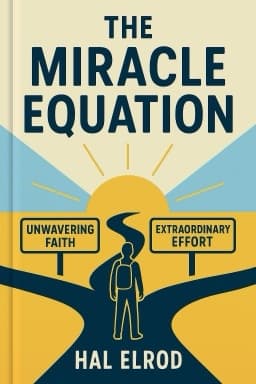
The Miracle Equation: Why Ordinary People Can Achieve Extraordinary Results (And How You Can Too!)
Discover the two simple decisions that can transform your life, no matter your starting point.

Imagine waking up tomorrow with the certainty that your biggest dreams are not just possible, but inevitable. That’s the promise at the heart of Hal Elrod’s 'The Miracle Equation.' While the title sounds lofty, the equation itself is refreshingly simple—and profoundly transformative. The book’s premise is that anyone, regardless of background, can achieve extraordinary results by making two unwavering decisions: to maintain unwavering faith and to put forth extraordinary effort, no matter what. This isn’t just motivational fluff; it’s a formula grounded in real-life stories, behavioral psychology, and proven strategies for personal growth.
The Two Decisions That Change Everything
At its core, the Miracle Equation is about bridging the gap between knowing and doing. Unwavering faith means believing in your goal even when there’s no evidence it will work out. Extraordinary effort means showing up every day, giving your best, and persisting through setbacks. When combined, these two decisions create a feedback loop—faith fuels effort, and effort reinforces faith—making success not just possible, but inevitable. The book is filled with stories of people who broke sales records, overcame illness, or rebuilt their lives after tragedy, all by applying this equation. What’s striking is how ordinary these people are; their secret is not talent, but commitment and resilience. 1
Overcoming the Inner Conflict
One of the most powerful sections of the book deals with the inherent human conflict: the tension between our limitations and our limitless potential. Our brains are wired to seek comfort and avoid risk, but growth requires us to step into discomfort. Elrod introduces the concept of 'potential dysmorphia,' a distorted self-view that causes us to underestimate our capabilities. By consciously choosing faith and effort, we can override this wiring and unlock new levels of achievement. The book also redefines entitlement: rather than expecting rewards without effort, it’s about believing you deserve success if you’re willing to work for it. 2
Emotional Mastery: The Five-Minute Rule
Setbacks are inevitable, but suffering is optional. The Miracle Equation introduces the Five-Minute Rule: allow yourself to fully feel negative emotions for five minutes, then consciously let them go using the mantra 'Can’t change it.' This practice, rooted in acceptance rather than forced positivity, helps you move from pain to peace quickly, freeing up energy for action. Acceptance doesn’t mean you’re happy about a setback, but it does mean you’re no longer resisting reality—which is the first step to moving forward. 3
Making Miracles Repeatable
Success isn’t just about big breakthroughs; it’s about building habits and systems that make extraordinary results repeatable. The book emphasizes the importance of mission focus (pursuing one meaningful goal at a time), accountability (sharing your goal with supportive partners or communities), and environmental engineering (structuring your surroundings to support your mission). These practices, combined with faith and effort, turn the Miracle Equation from a one-time event into a way of life. 4
The Ripple Effect: Inspiring Others
Perhaps the most inspiring aspect of the Miracle Equation is its ripple effect. When you achieve a miracle, you become a beacon for others—proof that ordinary people can do extraordinary things. Online communities have sprung up around this practice, where people share their journeys, celebrate wins, and support each other. This collective energy multiplies hope and courage, making the path to personal transformation both accessible and sustainable.
Conclusion: Your Miracle Starts Now
Whether your dream is to run a marathon, start a business, heal a relationship, or simply become the best version of yourself, the Miracle Equation offers a practical, repeatable formula for turning possibility into reality. The journey is not always easy, but with unwavering faith and extraordinary effort, every setback becomes a stepping stone, and every goal becomes a new beginning. The only question is: what miracle will you create next?
Want to explore more insights from this book?
Read the full book summary