
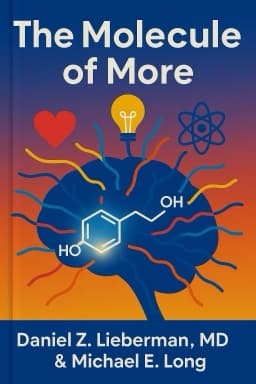
How Dopamine Secretly Rules Your Life (And What You Can Do About It!)
Unlocking the Hidden Force Behind Your Desires, Ambitions, and Everyday Choices

Unlocking the Hidden Force Behind Your Desires, Ambitions, and Everyday Choices
Have you ever wondered why the thrill of a new purchase fades so quickly, or why you’re always setting new goals right after achieving old ones? The answer, according to The Molecule of More, lies in a single neurotransmitter: dopamine. This tiny molecule in your brain is responsible for your endless pursuit of more—more experiences, more achievements, more love, more everything. But dopamine’s influence goes far beyond simple pleasure. It’s the engine behind human progress, creativity, and even the political divides that shape our world.
What is dopamine? Contrary to popular belief, dopamine isn’t the chemical of pleasure. Instead, it’s the chemical of anticipation, motivation, and desire. It’s what gets you out of bed in the morning and what keeps you scrolling through your phone late at night. Dopamine makes you restless for the next big thing, always looking ahead, rarely satisfied with the present moment.
The Double-Edged Sword: Progress and Addiction
Dopamine’s drive for more is responsible for civilization’s greatest achievements—from the invention of the wheel to space exploration. Yet, the same chemistry can lead to destructive habits: addiction, compulsive shopping, endless social media scrolling. When dopamine circuits are hijacked by substances or behaviors, the brain’s reward system becomes unbalanced. You crave things you no longer even enjoy, and natural pleasures lose their luster. This is why addiction is so persistent and why recovery is so challenging. 1 3
Love, Sex, and the Fade of Passion
Why does passionate love fade? The book explains that new love is fueled by a surge of dopamine, making everything about your partner seem magical. But as relationships mature, the brain shifts to chemicals like oxytocin and vasopressin, which foster attachment and stability. The initial thrill declines, but a deeper, more sustainable connection emerges—if you know how to nurture it.
Wanting vs. Liking: The Roots of Compulsion
One of the book’s most profound insights is the distinction between wanting and liking. Dopamine drives wanting, but liking—the actual enjoyment of a reward—is handled by other brain systems. This explains why you might crave a second piece of cake even if the first one didn’t taste as good as you remembered. In addiction, this split becomes extreme: the urge to seek is overwhelming, but the pleasure is gone. 4
Creativity and Madness: The Fine Line
Dopamine is also the source of human creativity. People with higher dopamine activity are better at connecting unrelated ideas, fueling innovation and artistic breakthroughs. However, excess dopamine can lead to distorted perception—hallucinations, delusions, or obsessive focus. Many creative geniuses walk a thin line between brilliance and madness, their chemistry both a gift and a curse.
Society on Dopamine: Progress, Politics, and Change
Dopamine’s influence extends beyond individuals. Societies with high dopamine cultures embrace change, innovation, and risk-taking. Others, guided by Here & Now chemistry, value tradition and stability. Political divides often reflect these underlying chemistries. Periods of rapid innovation are followed by eras of consolidation, mirroring the brain’s own cycles of seeking and satisfaction. 1 3
Finding Balance: From More to Enough
The book’s ultimate message is one of balance. While dopamine propels us forward, true happiness requires learning to savor the present. Mindfulness, gratitude, and strong social connections boost Here & Now chemicals, grounding us and helping us resist the endless chase. Practical tips include daily reflection, nurturing relationships, and celebrating small wins.
Conclusion: Mastering Your Molecule
Understanding dopamine is the key to understanding yourself. It explains your ambitions, your struggles, and your greatest joys. By learning to harness its power—and knowing when to let go—you can live a life that’s both driven and deeply content. The molecule of more is not your enemy; it’s your ally, if you know how to keep it in balance.
Want to dive deeper? Check out Blinkist’s summary or Shortform’s insights for more practical takeaways. 1 3
Want to explore more insights from this book?
Read the full book summary