
Why Your Friends and Family Lie to You (And How to Get the Truth): The Surprising Power of The Mom Test
Unlocking Honest Feedback Even When Everyone Wants to Be Nice

Unlocking Honest Feedback Even When Everyone Wants to Be Nice
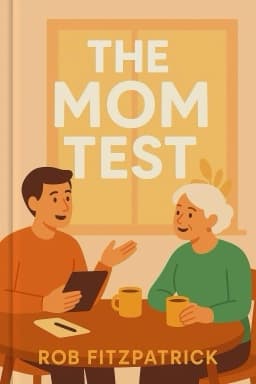
Imagine this: You’re at a family dinner, and you bravely share your new startup idea. Your mom smiles and says, 'That’s wonderful, honey!' Your friends nod supportively. But deep down, you wonder: Would they actually use it? Would anyone pay for it? Or are they just being polite? This is the conundrum at the heart of Rob Fitzpatrick’s 'The Mom Test.' The book’s title comes from the idea that even your mom—who loves you more than anyone—will lie to protect your feelings if you ask the wrong questions. The Mom Test is a practical guide to escaping the echo chamber of false praise and learning how to get real, actionable feedback on your business ideas.
At its core, The Mom Test teaches that the problem isn’t that people are dishonest—it’s that we ask bad questions. Most founders make the mistake of leading with their idea: 'Would you use this app?' or 'Do you think this is a good idea?' These questions invite compliments, hypotheticals, and polite lies. Instead, Fitzpatrick urges us to ask about the customer’s actual behavior. 'How did you solve this problem last time?' or 'Tell me about the last time you experienced this issue.' These questions ground the conversation in reality, not wishful thinking.
The book is packed with examples. One founder, eager to validate a new recipe app, asks friends if they’d use it. Everyone says yes. But when the founder digs deeper—asking how they currently find recipes—she discovers that most use cookbooks, family notes, or simply Google. None are actively seeking a new solution. This shift in questioning saves months of wasted development. Fitzpatrick’s approach isn’t just theory; it’s rooted in practical, repeatable tactics used by successful founders and product teams worldwide.
Another key takeaway is the danger of compliments and 'feature requests.' People love to brainstorm and be helpful, but their ideas often distract from the real problem. Instead of building every suggestion, Fitzpatrick advises probing for the motivation behind requests. 'Why do you want that?' or 'How are you coping without it?' These follow-up questions reveal whether a feature is a must-have or just a nice-to-have.
But The Mom Test isn’t just about asking questions—it’s about mindset. It teaches humility: being open to hearing that your idea isn’t needed, or that the problem isn’t urgent. It’s about embracing rejection as a gift, not a setback. The book encourages founders to seek out the scary questions—the ones that could invalidate their idea—early and often. This honest, iterative approach leads to better products and stronger businesses.
To put these lessons into practice, Fitzpatrick offers a simple framework: Prepare before each conversation with clear learning goals. Afterward, share notes with your team, using symbols and direct quotes to highlight insights. Review and reflect together, updating your assumptions and plans as you go. This process turns scattered conversations into a powerful engine for learning and growth.
In summary, The Mom Test is essential reading for anyone building something new. It’s a book about asking better questions, listening deeply, and valuing truth over comfort. By mastering these skills, you’ll avoid the traps of polite lies and build products people truly want.
Want to explore more insights from this book?
Read the full book summary