
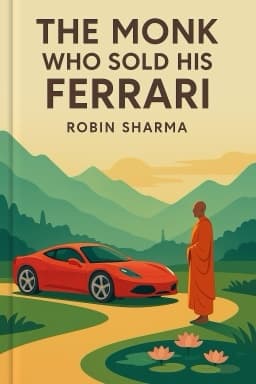
Why You Don’t Need a Ferrari: The Surprising Science Behind Happiness and Simplicity
What Modern Research Reveals About the Ancient Wisdom in The Monk Who Sold His Ferrari

What Modern Research Reveals About the Ancient Wisdom in The Monk Who Sold His Ferrari
When Julian Mantle traded his Ferrari for a life of simplicity, he wasn’t just following a spiritual path—he was unknowingly aligning himself with some of the most robust findings in modern psychology. This blog unpacks the science behind the book’s lessons, showing why letting go of excess and nurturing your mind, body, and spirit is the real key to happiness.
The Ferrari Fallacy: Why Stuff Doesn’t Satisfy
For decades, researchers have studied the link between wealth and happiness. The verdict? Once basic needs are met, more money and possessions yield only marginal increases in well-being. The 'Ferrari' in Sharma’s book is a metaphor for this trap. . Studies show that after a certain point, material gains stop delivering emotional returns. Instead, they often lead to stress, comparison, and emptiness. Takeaway: Invest in experiences, relationships, and personal growth, not just stuff. 1
Habit Science: The Power of Rituals
The Sages’ daily rituals—meditation, movement, healthy eating—are not just spiritual practices. Neuroscience reveals that small, consistent habits rewire the brain, making positive behaviors automatic over time. . James Clear, author of 'Atomic Habits', echoes this: “You do not rise to the level of your goals. You fall to the level of your systems.” The Sages’ rituals are systems for happiness. Tip: Start with one tiny habit, like writing three gratitudes each morning, and let it grow. 1
Mindfulness and Mental Health
Modern studies confirm what the Sages taught Julian: mindfulness reduces anxiety, boosts focus, and increases overall life satisfaction. MRI scans show that regular meditation strengthens areas of the brain associated with emotional regulation. . Mindfulness isn’t just for monks—anyone can benefit. Try a two-minute breathing exercise before meetings or stressful events. 3
The Power of Purpose (Dharma) and Community
Living with purpose is one of the strongest predictors of health and happiness. The Sages’ concept of Dharma—finding and living your unique calling—mirrors research showing that people with a sense of meaning live longer and cope better with challenges. . Community and service are equally vital: volunteering and helping others release feel-good chemicals in the brain, creating a feedback loop of well-being. 2
Solitude, Reflection, and Creativity
Solitude, often feared in modern life, is a cornerstone of the Sages’ wisdom. Studies now show that time alone—used for reflection or creative pursuits—boosts problem-solving and emotional resilience. . Reflection helps integrate experiences and set clear intentions. Try this: Spend ten minutes each evening reviewing your day and setting a positive intention for tomorrow. 4
Conclusion: The Science of a Simpler, Happier Life
The Monk Who Sold His Ferrari is not just a fable but a field guide for modern well-being, validated by science. Start small, simplify, and savor the journey. The Ferrari can wait—your happiness can’t.
Want to explore more insights from this book?
Read the full book summary