
How Evolutionary Psychology Can Make You Kinder (and Wiser)
Practical Lessons from ‘The Moral Animal’ for a More Compassionate Life

Practical Lessons from ‘The Moral Animal’ for a More Compassionate Life
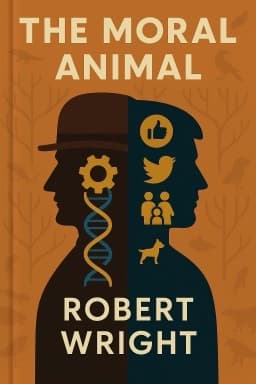
Can understanding the science of human nature actually make you a better person? According to ‘The Moral Animal,’ the answer is yes—if you use its insights wisely. Wright’s book is not just about why we act as we do, but about how we can rise above our evolutionary wiring. One key lesson is the naturalistic fallacy: just because a behavior is natural doesn’t mean it’s good. Evolution explains why we sometimes favor our own group or struggle with jealousy, but it doesn’t excuse acting on those impulses.
By recognizing our biases and blind spots, we can choose to expand our empathy, forgive others, and build more inclusive communities. History shows that moral progress is possible—societies have expanded the circle of compassion from family to tribe, nation, and even species. Self-knowledge is the first step to self-mastery and healing. With humility, reflection, and courage, we can use evolutionary psychology not just to understand ourselves, but to become kinder, wiser, and more compassionate. 1 2
Want to explore more insights from this book?
Read the full book summary