
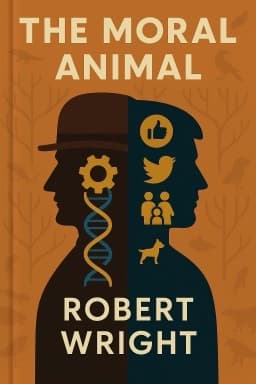
Why ‘The Moral Animal’ Will Change How You See Yourself Forever
Unlocking the Secrets of Human Nature Through Evolutionary Science

Unlocking the Secrets of Human Nature Through Evolutionary Science
If you’ve ever wondered why you fall in love, why you get jealous, or why your family sometimes drives you crazy, ‘The Moral Animal’ by Robert Wright might just blow your mind. This groundbreaking book isn’t just a review of evolutionary psychology—it’s a journey into the hidden logic behind everything you do, think, and feel. Wright’s thesis is simple but profound: our minds, like our bodies, are products of evolution, shaped by the relentless pressures of natural selection. But what does that mean for your daily life?
At its core, the book argues that our moral sense, our relationships, and even our quirks and neuroses are not random; they’re the result of strategies that helped our ancestors survive and reproduce. Take, for example, the way men and women approach romance. Wright shows, with a mix of scientific studies and real-life examples, that men are often more open to casual sex because, from an evolutionary standpoint, spreading genes far and wide was a winning strategy. Women, on the other hand, have evolved to be more selective, seeking out partners who offer resources and commitment—qualities that help ensure the survival of their children.
But sexuality is just the beginning. ‘The Moral Animal’ dives into family life, explaining why sibling rivalry is universal and why parents sometimes (often unconsciously) play favorites. The principle of kin selection means we’re wired to care most about those who share our genes, but even within families, competition for resources can be fierce. This isn’t just theory—Wright backs it up with examples from animal studies, anthropology, and everyday life, making the science feel personal and relatable.
Friendships and alliances are next. Why do we help others? Is it pure altruism, or is there a deeper game at play? Wright explains the concept of reciprocal altruism—helping others with the expectation of future return. Our brains are wired to remember favors, punish cheaters, and value reputation, all of which were vital for survival in small ancestral groups.
Perhaps most unsettling is Wright’s exploration of deception and self-deception. We all wear masks, sometimes even fooling ourselves, because believing our own stories can make us more convincing to others. Conscience, guilt, and shame evolved not as moral absolutes, but as tools to keep us in line with group expectations. This explains why we sometimes rationalize bad behavior or feel guilty for things that don’t really matter. Understanding these patterns can help us forgive ourselves and others, and build stronger, more honest communities.
Finally, ‘The Moral Animal’ offers hope. While our instincts are ancient, we are not their slaves. By understanding where our biases and blind spots come from, we can make wiser choices, expand our empathy, and create a more compassionate society. The book’s message is clear: self-knowledge is the first step to self-mastery and healing. Whether you’re interested in psychology, relationships, or just becoming a better human, this book is a must-read. 1 2
Want to explore more insights from this book?
Read the full book summary