
The Cross, Not the Sword: Why Radical Love Is the Church’s Greatest Weapon
How Sacrificial Love Transforms Lives and Communities

How Sacrificial Love Transforms Lives and Communities
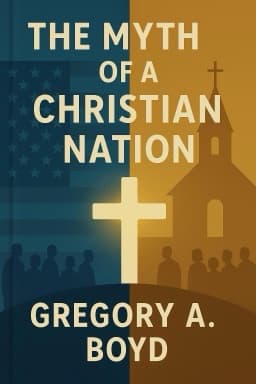
In a world where power is measured by dominance, the message of the cross is a scandal. Gregory Boyd’s The Myth of a Christian Nation insists that the true power of the church lies not in the sword of coercion, but in the cross of self-sacrifice. This radical love is not just an idea; it’s a force that has changed lives and shaped history.
The early church understood this. Refusing to retaliate against persecution, they forgave their enemies, cared for the sick, and welcomed the outcast. Research shows that communities marked by generosity and forgiveness are healthier, happier, and more resilient. Boyd’s book is filled with stories of ordinary believers whose simple acts of love have broken down barriers and healed wounds that politics could not touch.
This way of the cross is not weakness; it is strength. It takes courage to forgive, to serve, to love those who hurt us. When churches embody this love, they become places of healing and hope, offering a living alternative to the violence and division of the world.
Boyd challenges readers to lay down the sword—the temptation to control or dominate—and pick up the cross. This means serving the poor, forgiving offenders, and building bridges across divides. When the church does this, it becomes a beacon of light, drawing people not by force, but by the irresistible power of love.
The cross, not the sword, is the church’s greatest weapon. It is the way of Jesus—and it is the hope of the world.
Sources:
1
2
3
Want to explore more insights from this book?
Read the full book summary