
Why Mixing Politics and Faith Is Making Us Weaker—And How the Early Church Got It Right
How the Quest for Political Power Dulls the Church’s Radical Edge

How the Quest for Political Power Dulls the Church’s Radical Edge
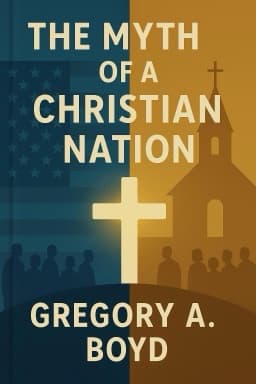
In a world where politics seems to seep into every conversation, the church’s relationship with power is under more scrutiny than ever. Gregory Boyd’s The Myth of a Christian Nation is a wake-up call, exposing how the quest for political influence has not only distracted the church from its true mission but has actually made it weaker, less compassionate, and less like Jesus. Boyd’s central thesis is stark: whenever the church gets too close to any political or national ideology, it is disastrous for the church and harmful to society. The early church, he reminds us, had no political power and yet changed the world through love, service, and radical forgiveness. What happened?
Boyd traces the roots of the problem to the myth that America—or any nation—can be truly Christian. This myth, he argues, is not just historically inaccurate but spiritually toxic. It tempts believers to equate faithfulness with patriotism, to see political victories as spiritual ones, and to justify ugly behavior in the name of 'defending Christian values.' The result? Churches become divided along party lines, outsiders feel unwelcome, and the gospel message gets buried beneath culture wars.
But the early church was different. Persecuted, misunderstood, and often powerless, they grew not by force but by love. Their refusal to retaliate, their care for the poor and sick, and their willingness to forgive even their executioners made them a beacon of hope in a brutal world. Boyd argues that this is the model the modern church must recover. 'The kingdom of the cross,' he writes, 'is not about winning or dominating, but about serving and suffering for others.' The church’s real power lies not in the ballot box, but in the basin and towel.
Boyd’s critique is not just negative; he offers a positive vision of the church as a 'colony of heaven,' a community set apart not by its political clout but by its Christlike love. He challenges readers to reject the 'sword'—the world’s way of coercion—and embrace the cross, the way of humility and sacrifice. This means loving enemies, refusing to demonize opponents, and serving those who can never repay us. It also means letting go of the need to control society and instead focusing on being a visible sign of God’s love in a fractured world.
Recent research supports Boyd’s claims: churches that focus on service, reconciliation, and peacemaking are not only healthier but have a greater impact on their communities. When believers put love first, walls come down, wounds heal, and people are drawn to the gospel—not because it promises power, but because it offers hope.
In conclusion, The Myth of a Christian Nation is more than a critique; it’s a call to rediscover the church’s true identity. By letting go of the quest for power and embracing the path of love, the church can once again become a force for healing and transformation in the world. The early church did it—and so can we.
Sources:
1
2
3
Want to explore more insights from this book?
Read the full book summary