
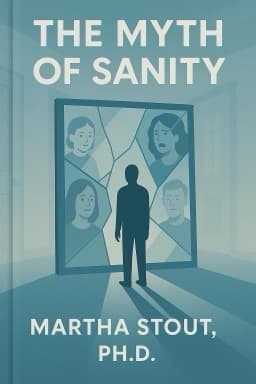
Shattering the Myth: Why Trauma Is Everyone’s Story
How Hidden Wounds Shape Families, Cultures, and the World Around Us

How Hidden Wounds Shape Families, Cultures, and the World Around Us
We all like to believe that trauma is something that happens elsewhere—to other people, in other families, in distant lands. But Martha Stout’s ‘The Myth of Sanity’ explodes this comforting illusion. Trauma, she argues, is woven into the fabric of every family tree, every community, and every culture. It’s not just about war or disaster; it’s about the child who waits in fear for a parent who never comes, the family that never speaks of an old loss, the society that looks away from suffering.
Recent research supports Stout’s insights: trauma can be passed down through both behavior and biology, shaping everything from our stress responses to our worldview. Families inherit not just eye color or stories, but also coping styles, fears, and even dissociative tendencies. And it’s not just the direct victims who suffer. Therapists, doctors, teachers, and even friends can experience secondary trauma—absorbing the pain of those they care for, often without realizing it.
Why does this matter? Because silence and secrecy allow trauma to fester, repeating across generations. But when we name what has been hidden, we begin to break the cycle. Stout’s stories of families who find ways to talk about their pain, communities that come together to heal, and individuals who choose to face the past, show that collective healing is possible. The journey isn’t easy, but it is essential—for ourselves, our children, and the world we hope to build. Trauma may be everyone’s story, but so is resilience. The choice to heal belongs to us all.
Want to explore more insights from this book?
Read the full book summary