
You’re Not Broken: The Hidden Ways ‘Normal’ People Survive Trauma
How Everyday Dissociation Keeps Us Safe—And What It Means For Healing

How Everyday Dissociation Keeps Us Safe—And What It Means For Healing
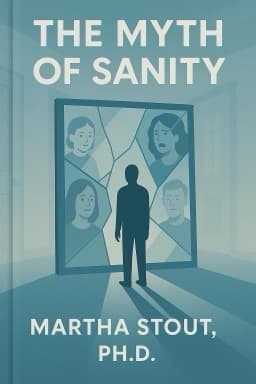
Imagine this: You’re driving home after a long day, and suddenly you realize you don’t remember the last five miles. Or you find yourself staring at your phone, lost in a daydream, with no memory of what you were just doing. These moments aren’t signs of a failing mind. According to Martha Stout’s ‘The Myth of Sanity,’ they’re evidence of a remarkable, universal survival mechanism: dissociation.
Stout’s groundbreaking work reveals that dissociation is not just for those with severe trauma or dramatic histories. In fact, it’s a built-in feature of every human psyche—a way to protect ourselves from pain, fear, or emotional overwhelm. The book weaves together case studies of seemingly ordinary people—a successful executive, a loving parent, a college student—each with hidden pockets of memory loss, emotional numbness, or unexplained anxiety. Their stories show us that trauma is far more common and subtle than we think, and that the mind’s ability to ‘split off’ experience is both a curse and a gift.
But why does this matter? Because millions walk through life haunted by feelings of emptiness, shame, or confusion, blaming themselves for not being able to ‘just move on.’ Stout’s research and clinical wisdom offer hope: you’re not broken. Dissociation is a normal response to abnormal situations, and recognizing it is the first step toward healing. Through therapy, mindfulness, and compassionate relationships, survivors can gently reclaim lost pieces of themselves, transforming old wounds into sources of strength and empathy.
In a culture obsessed with outward success and emotional control, ‘The Myth of Sanity’ invites us to honor our hidden struggles and to see dissociation not as a weakness, but as a profound act of survival. The path to wholeness is not about erasing pain, but about learning to live with all of ourselves—fragmented, resilient, and beautifully human. Read on to discover how you, too, can turn survival into genuine living.
Want to explore more insights from this book?
Read the full book summary