
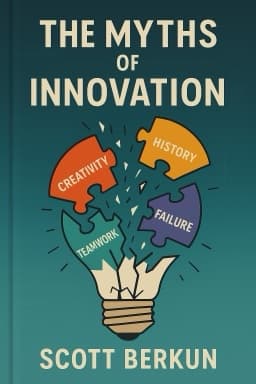
Forget the Formula: Why Innovation Defies Simple Recipes
The unpredictable, messy reality behind every breakthrough

Many aspiring innovators seek a step-by-step guide, a secret recipe that guarantees success. Unfortunately, no such formula exists.
Unlike controlled experiments, innovation ventures into the unknown. Sometimes experiments fail spectacularly; other times they yield unexpected results. This unpredictability means that rigid methodologies often fail to capture the true nature of innovation.
Historical breakthroughs, like the invention of the microprocessor, were not born from perfect plans but from persistent trial, error, and adaptation.
Psychological research shows that persistence and the willingness to learn from failure are critical traits of successful innovators. Embracing failure as feedback rather than defeat allows creative minds to refine ideas and improve.
For readers, this means letting go of the illusion of control and embracing curiosity, flexibility, and resilience. Innovation is not a straight path but a winding road requiring courage and adaptability.
Next, we will examine the social hurdles innovators face and how to overcome resistance to new ideas.
Sources: Scott Berkun’s 'The Myths of Innovation' 1 , 2 , 3
Want to explore more insights from this book?
Read the full book summary